Soil & Nutrition
Understanding soil health, pH, nutrients and fertiliser management
21 articles
 18 min
Integrated Nutrient Management in Soybean: What INM Is, Trial Results, Manure Quantities and Cost-Benefit
Integrated nutrient management (INM) in soybean means feeding the crop from three sources together: a reduced dose of chemical fertiliser, organic manure such as FYM or vermicompost, and biofertilisers such as Rhizobium and PSB. ICAR-IISS Bhopal lists 50 percent of the NPKS dose plus 5 tonnes FYM per hectare plus Rhizobium as one of its two best modules in soybean-wheat. At Pantnagar, 50 percent RDF plus 10 tonnes FYM per hectare matched or beat full RDF alone, and full RDF plus FYM gave the highest yield. Start from a soil test and treat every replacement share as a starting point, not a rule.
 17 min
Soybean Nutrient Deficiency: Nutrient Requirement, Uptake, Symptoms, Look-alikes and How to Diagnose Them
Soybean takes much of its nitrogen from the air through root nodules, so the nutrients to watch are phosphorus, potassium and sulphur, with zinc in many Indian soils. Older leaves go first for nitrogen, phosphorus, potassium, magnesium and molybdenum. Young leaves go first for sulphur, iron and manganese. Before you spray, dig up a few plants and look at nodules, roots and whitefly, because yellow mosaic virus, herbicide injury, waterlogging and compaction look alike. Confirm with a soil test (yellow patch against a healthy patch), use a tissue test only as a second opinion, and send the dose question to your state recommendation or our schedule post.
 17 min
Fertilizer Schedule for Soybean: Stage-Wise Dose per Acre for Seed Treatment, Basal, Sulphur, Zinc, Boron, Molybdenum and Flowering Sprays
Soybean makes much of its own nitrogen, so the schedule is mainly about seed treatment, phosphorus, potash, sulphur and a few micronutrients. Treat seed with Rhizobium and PSB, put the full basal dose in the furrow below the seed at sowing, and spray DAP or urea at 20 g per litre at flowering and again 15 days later. TNAU gives 20:80:40 kg N:P2O5:K2O per hectare plus 40 kg sulphur and 25 kg zinc sulphate for irrigated soybean (about 8:32:16 kg per acre, 16 kg S, 10 kg zinc sulphate), and a blanket 20:40:20:20 for rainfed soybean (about 8:16:8:8 per acre) when no soil test is available. Assam Agricultural University recommends 20:60:40 per hectare. Your soil test and state recommendation decide the final dose.
 15 min
Nutrient Deficiencies in Marigold: How to Identify Each One by Symptom and Leaf Age, Rule Out Look-alikes and Correct It
Check which leaves go first. Older, lower leaves: nitrogen, phosphorus, potassium or magnesium. Young leaves and the growing tip: calcium, boron, iron, manganese, sulphur or zinc. In a marigold nutrient-solution trial, plants short of nitrogen, calcium or boron did not flower at all. Before you spray, dig up two plants and look for brown roots, black vascular streaks (Fusarium), leaf spots and mites, because they look alike. Confirm with a soil test or leaf test, then correct: nitrogen, phosphorus and potassium through the soil, and calcium, boron, zinc and iron mostly by label-dose foliar spray plus a soil fix.
 17 min
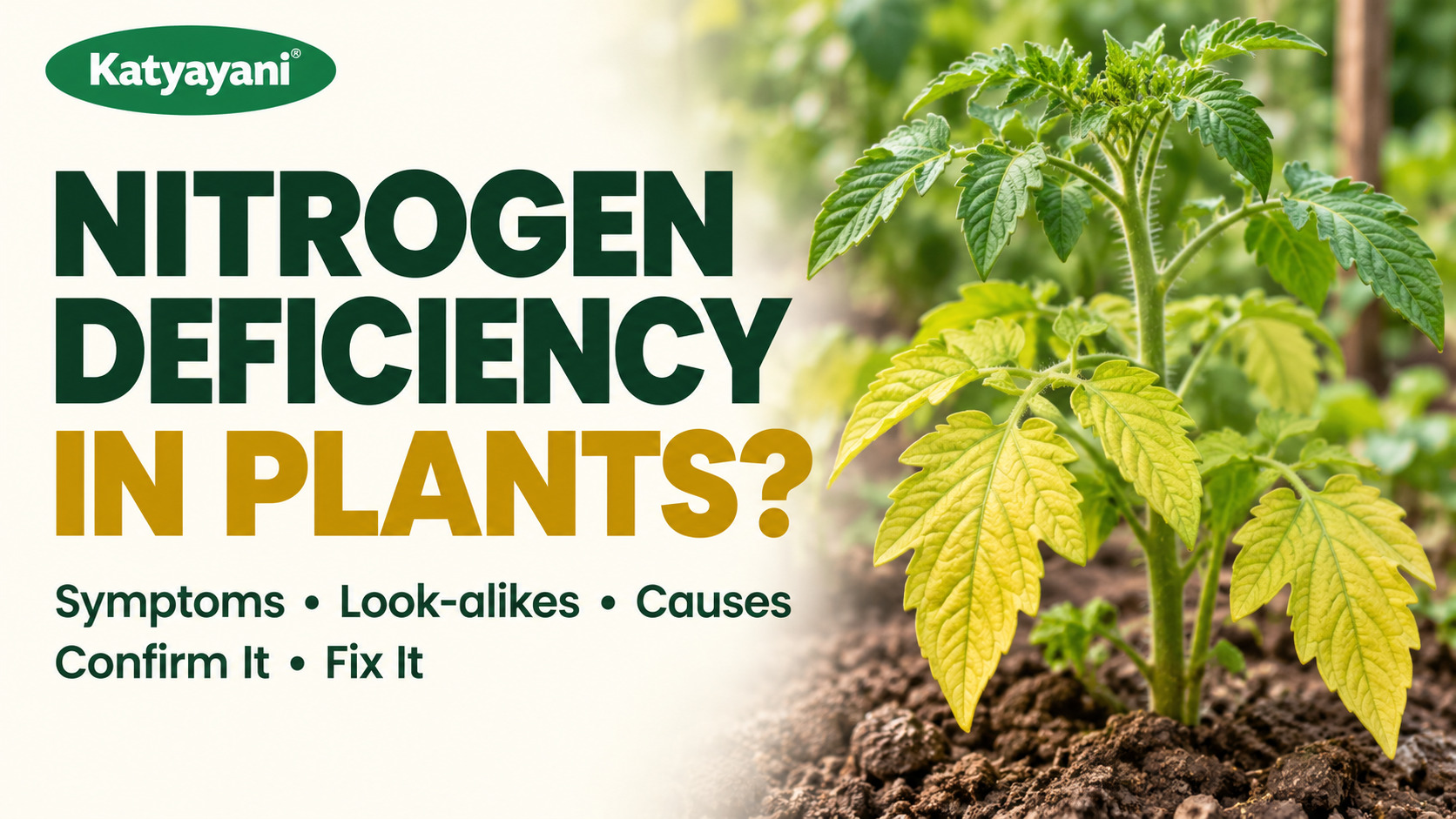
Nitrogen Deficiency in Plants: Symptoms, Look-alikes, Causes, How to Confirm It and How to Fix It
Nitrogen deficiency shows as pale green to yellow older leaves, slow growth and thin, stunted plants. Nitrogen moves inside the plant, so the oldest leaves go first. In maize the yellowing makes a V from the leaf tip. Before you add urea, rule out root problems, waterlogging, cold soil, sulphur and disease, because they look alike. Confirm with a soil test, a leaf colour chart or a tissue test. Quick fix: a dilute urea spray as per your state agricultural university recommendation, then correct the soil with split doses. Pulses mostly fix their own nitrogen.
 19 min
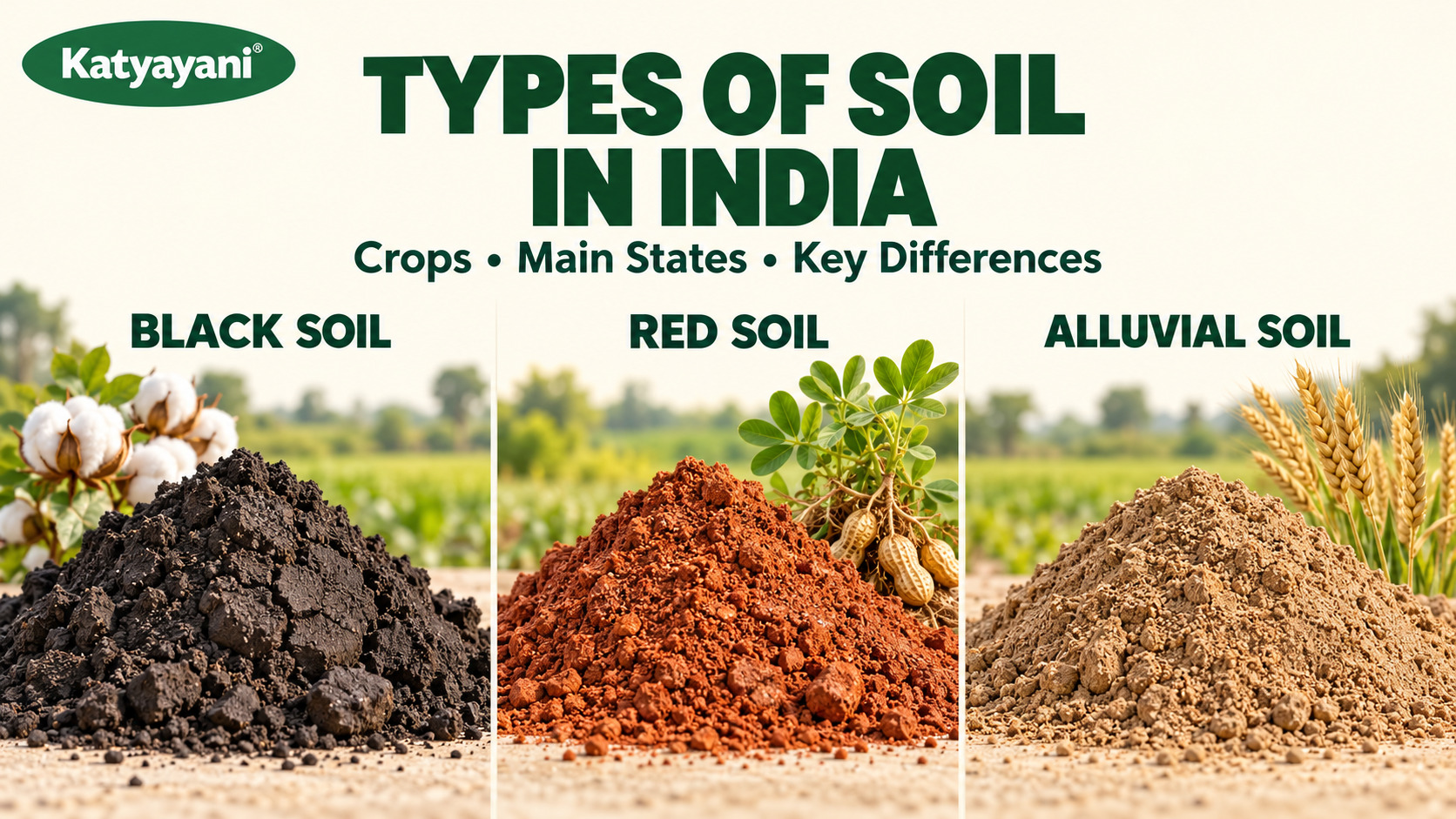
Types of Soil in India: Black, Red and Alluvial Soil Compared, with Crops and Main States
India has eight main soil groups in the ICAR classification: alluvial, black (regur), red, laterite, arid or desert, saline and alkaline, peaty and marshy, and forest and mountain. No single soil is best for every crop. Alluvial soil of the Indo-Gangetic plains covers the largest share of India and is the main base for wheat and rice. Black soil holds the most water and is the cotton soil, but it is low in nitrogen, phosphorus, zinc and organic matter and is hard to work. Red soil is light, acidic and low in fertility but responds well to manure, lime and balanced fertiliser. Laterite suits plantations. The best soil depends on your crop, your water and the depth of the soil.
 20 min
Soil Salinity: Causes, Symptoms in Crops, EC and pH Limits, Testing and How to Reclaim Salty Soil
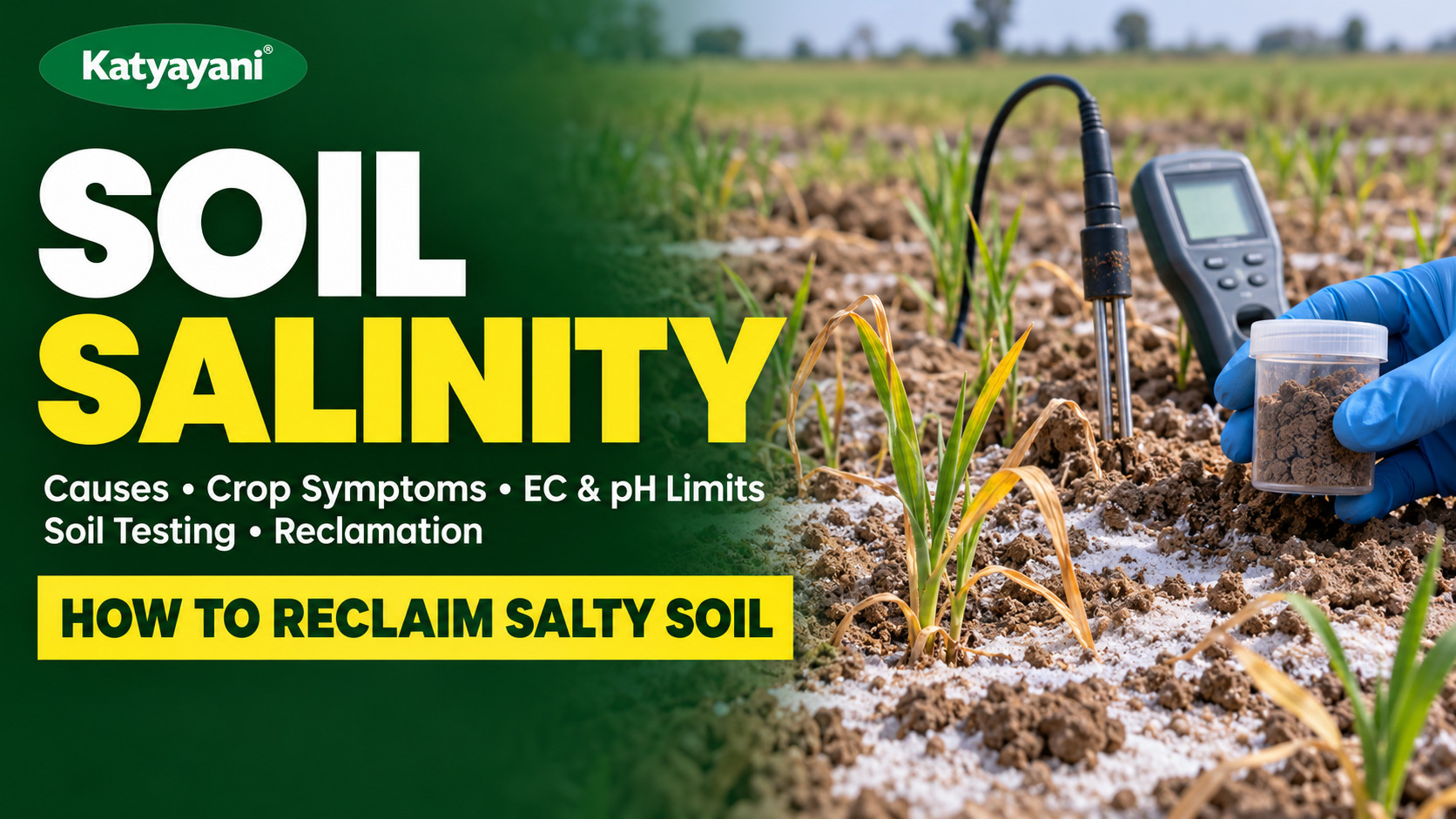
Soil salinity means too much soluble salt in the root zone. Water cannot move into roots, so crops look drought-hit even when the field is wet. A soil is called saline when its saturation-extract EC is above 4 dS/m, pH is below 8.5 and ESP is below 15 percent.
 11 min
Why Are Plants Growing Slowly? Common Causes, How to Diagnose Them and What to Do
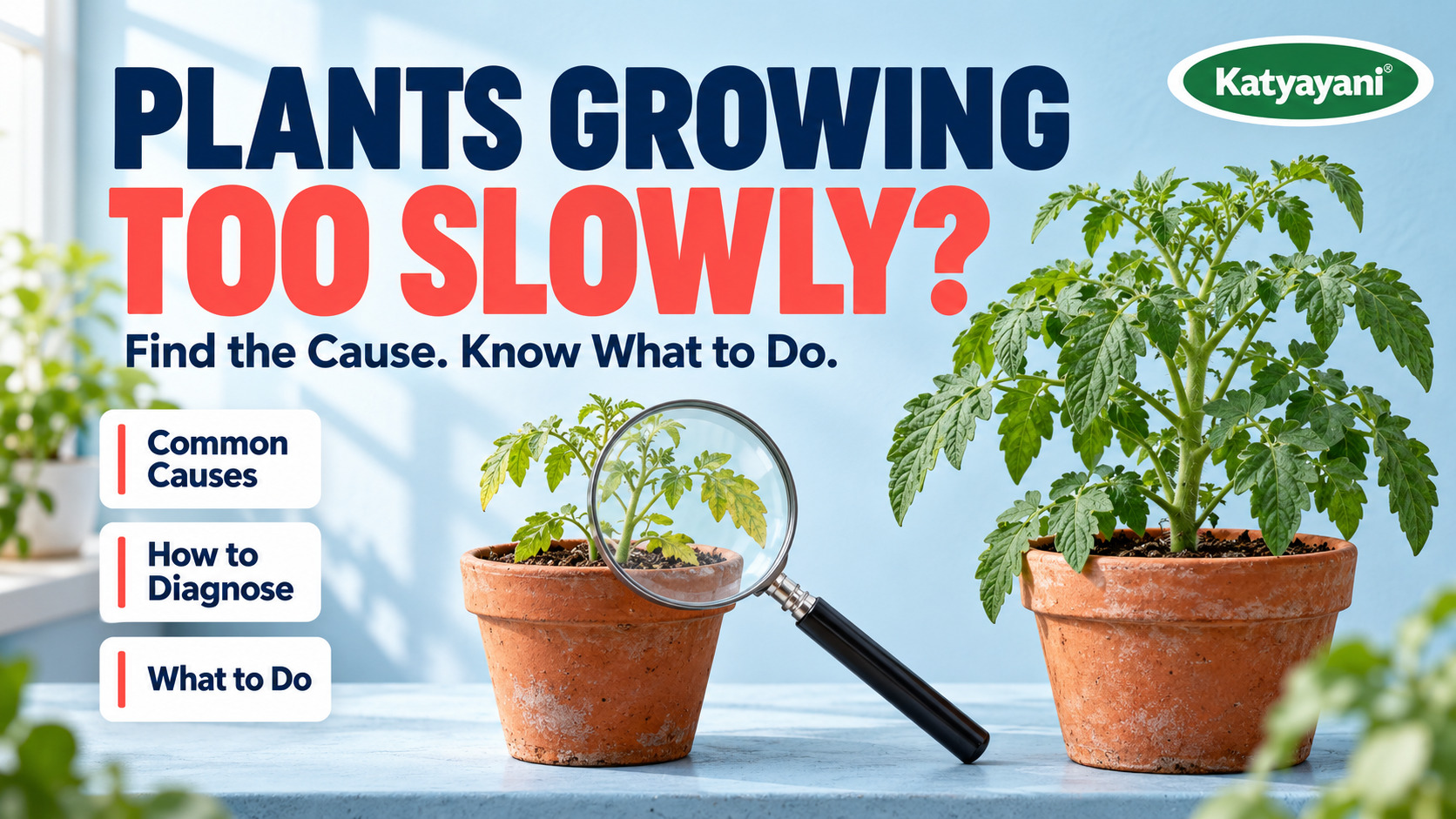
Plants usually grow slowly because something is limiting their roots or leaves: too little light, too much or too little water, soil pH that locks nutrients, a missing nutrient, cramped or compacted roots, pests or disease, cold, or salt in the soil. Look at which leaves show the problem, check the roots, then fix the single biggest limit first.
 12 min
Hydroponics for Beginners: Systems, Nutrients, Home Setup and Common Mistakes
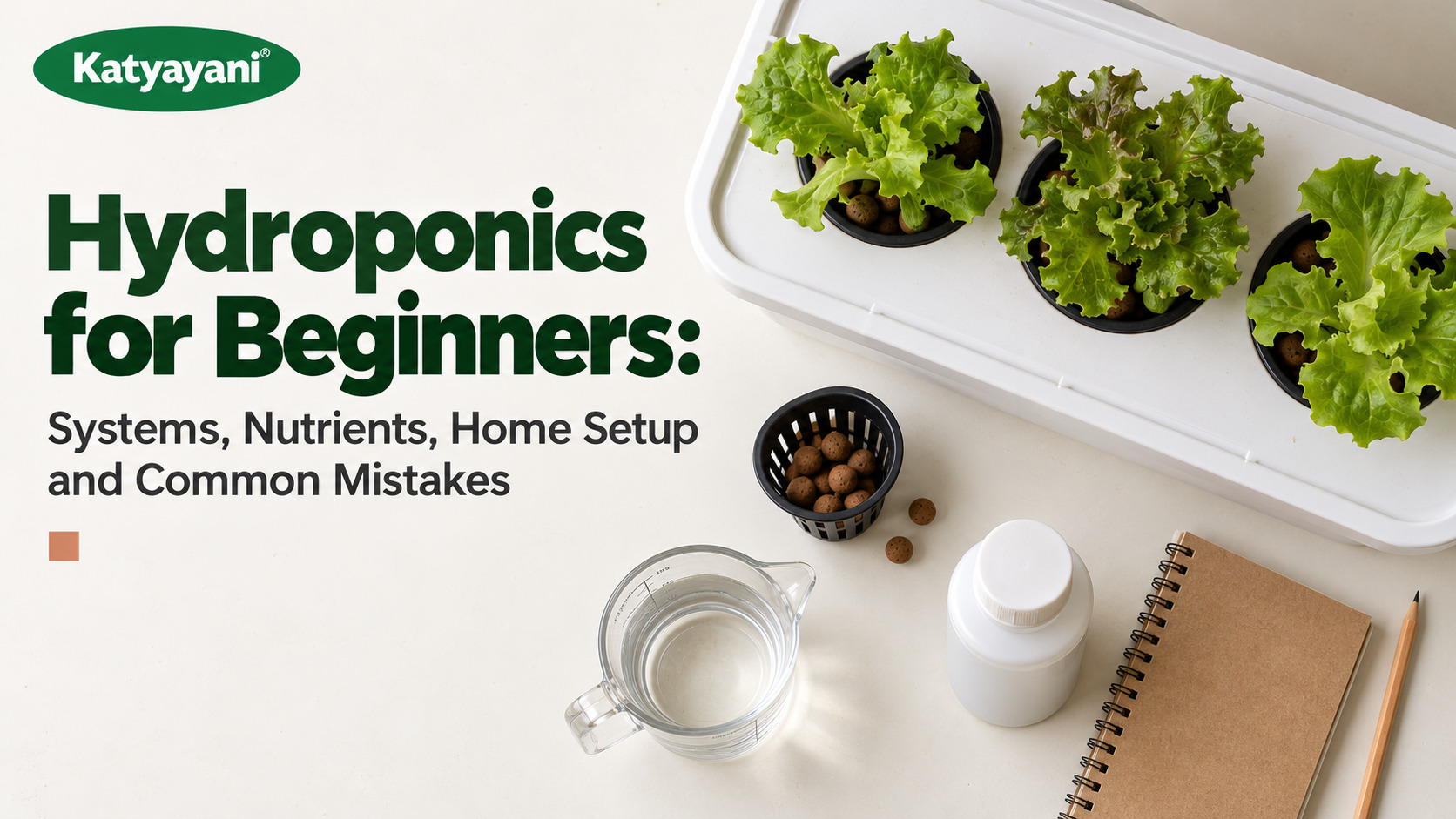
Hydroponics is growing plants without soil by feeding their roots a water-based nutrient solution. Beginners should start with the Kratky method or deep water culture and grow lettuce or herbs. Keep nutrient pH at about 5.5 to 6.5 and EC near 1.2 to 1.8 dS/m, use a darkened reservoir, and check the solution weekly.
 13 min
Benefits of Mulching: Types, How Much to Apply, Organic vs Plastic and Common Mistakes
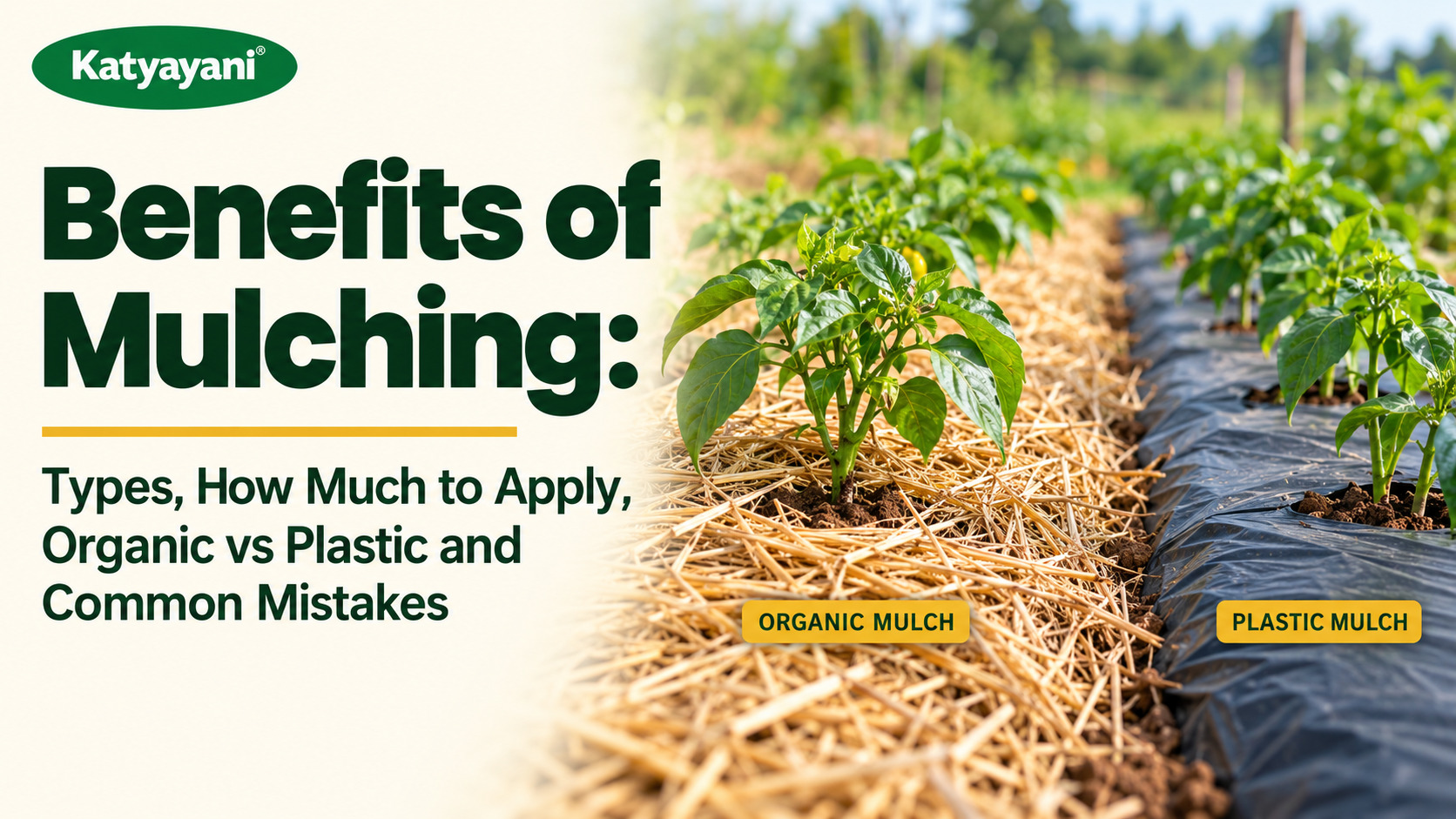
Mulching means covering the soil surface with a protective layer such as straw, leaves, wood chips, compost or plastic film. It conserves soil moisture, suppresses weeds, moderates soil temperature, reduces erosion and, with organic mulch, adds organic matter as it decomposes. Typical depth is about 5 to 10 cm, less for fine materials.
 10 min
Plant Growth Regulators: Types, Examples, Uses and PGR vs Biostimulants
Plant growth regulators (PGRs) are natural or synthetic compounds that, in very small amounts, promote, inhibit or modify plant growth and development. The five main classes are auxins, gibberellins, cytokinins, abscisic acid and ethylene. Growers use them for rooting, flowering, fruit set, ripening and height control. In India, PGRs are regulated under the Insecticides Act, while biostimulants come under the Fertiliser Control Order.
 12 min
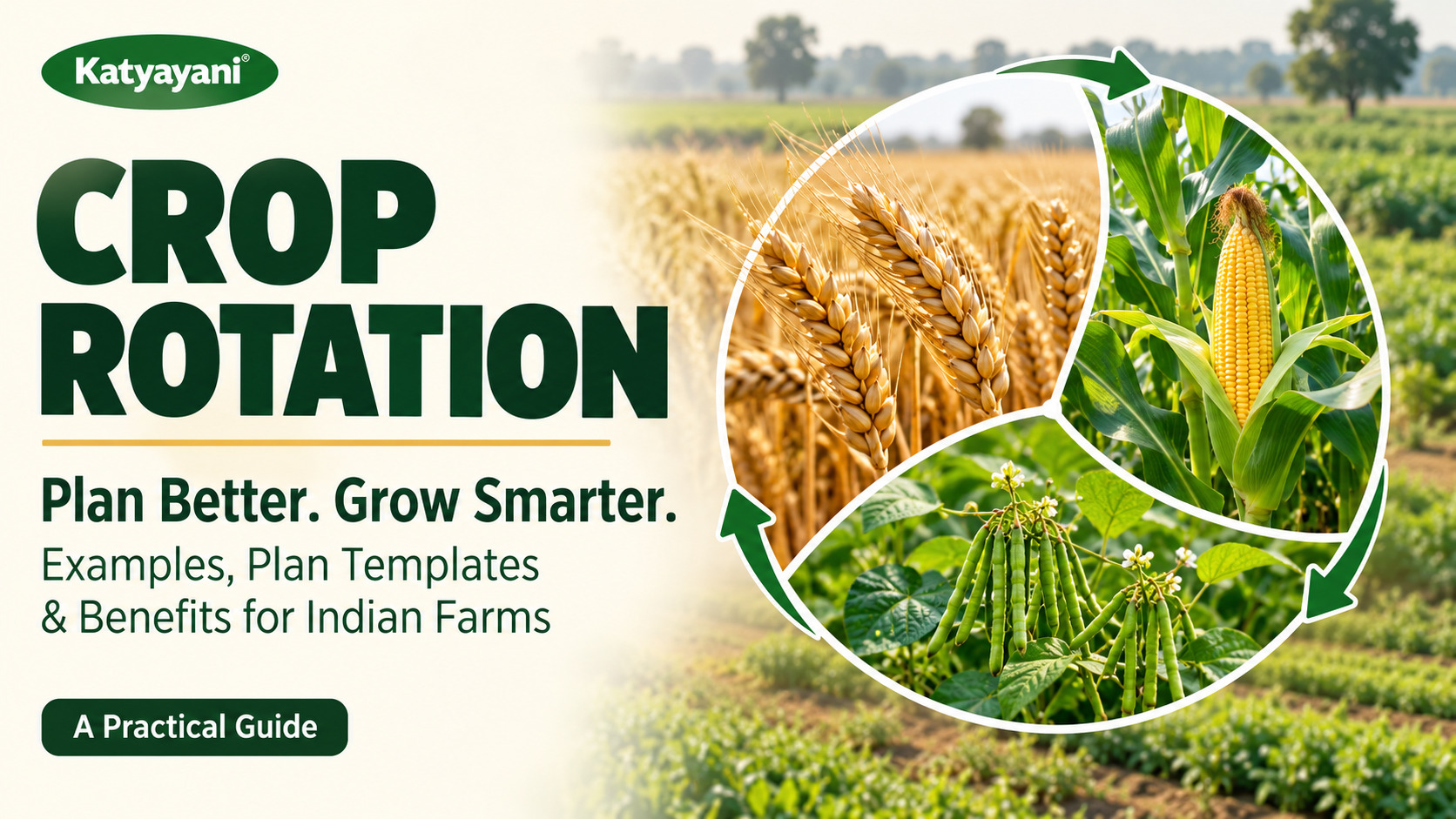
Crop Rotation: Examples, Plan Templates and Benefits for Indian Farms
Crop rotation is growing different crops one after another on the same land instead of repeating one crop. A legume such as chana or moong is followed by a cereal such as wheat or rice, so soil nitrogen is restored and pest and disease cycles break. The simplest order is legume, then leafy or fruiting crop, then root crop, then back to legume.