Rabi & Horticulture Crop Guides
Explore Rabi and horticulture crop guides with practical tips on cultivation, nutrition, pest control, disease management, and better crop growth.
55 articles
 27 min
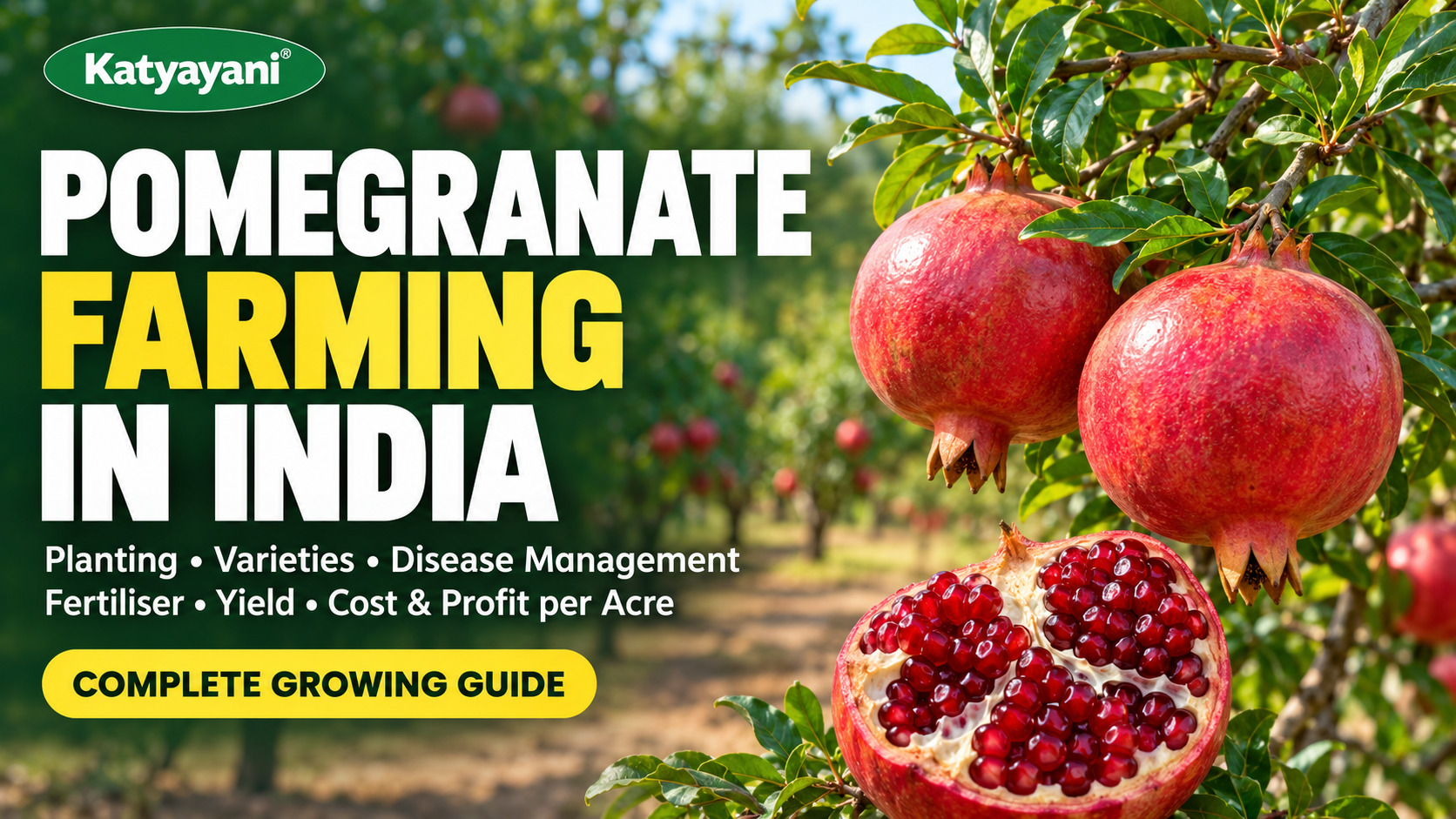
Pomegranate Farming in India: Planting Time, Varieties, Spacing, Telya and Wilt, Fertiliser Schedule, Yield, Cost and Profit per Acre
Pomegranate (anar) is planted at the start or end of the monsoon (July to September), or in February to March in sub-tropical areas, at 5 x 5 m or 4 x 4 m with pruning, which is about 160 to 250 plants per acre. Ganesh, Bhagwa, Arakta and Mridula are the common varieties.
 19 min
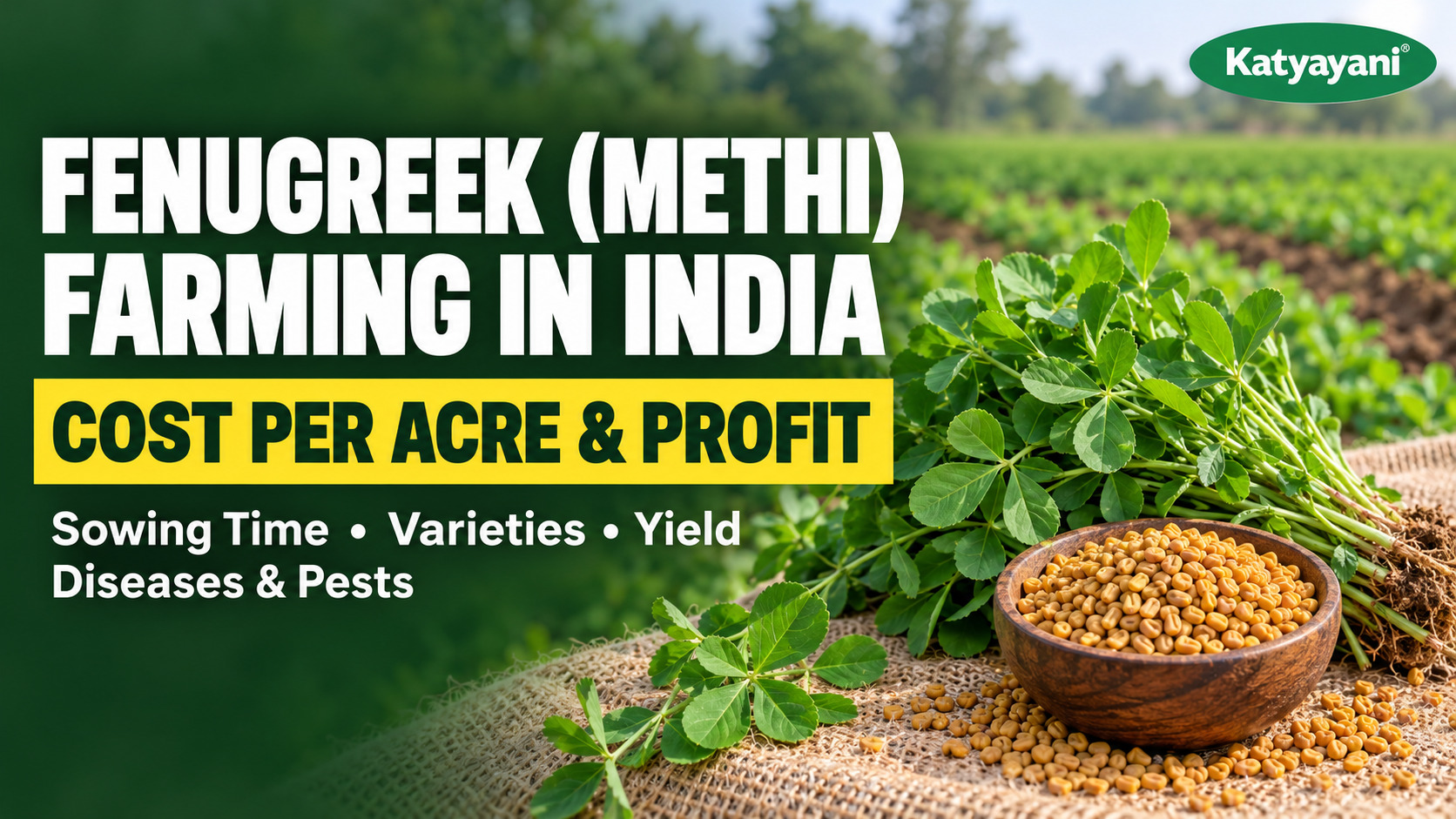
Fenugreek (Methi) Farming in India: Sowing Time, Varieties, Cost per Acre, Diseases, Pests, Yield and Profit
Methi (fenugreek) is a cool-season rabi legume that gives three different products: fresh green leaf, dried kasuri-type leaf and seed. In Rajasthan the seed crop is sown from the last week of October to the first week of November, and Nagaur's dried-leaf pan methi in the second fortnight of October. In ICAR-NRCSS studies, seed methi cost about Rs 20,251 per hectare (about Rs 8,200 per acre) in 2013 to 2019 demonstrations and returned a benefit-cost ratio of 3.2, while dried-leaf pan methi cost Rs 147,366 per hectare (about Rs 59,700 per acre) in 2020-21 and the farmers there netted about Rs 259,279 per hectare (about Rs 105,000 per acre) at about Rs 105 per kg of dried leaf. Profit is yield times your actual price minus cost, so check today's mandi rate. Aphid is the most serious pest, and powdery mildew, downy mildew and root rot are the main diseases. We found no CIB&RC chemical row for fenugreek, so follow the product label and your KVK.
 18 min
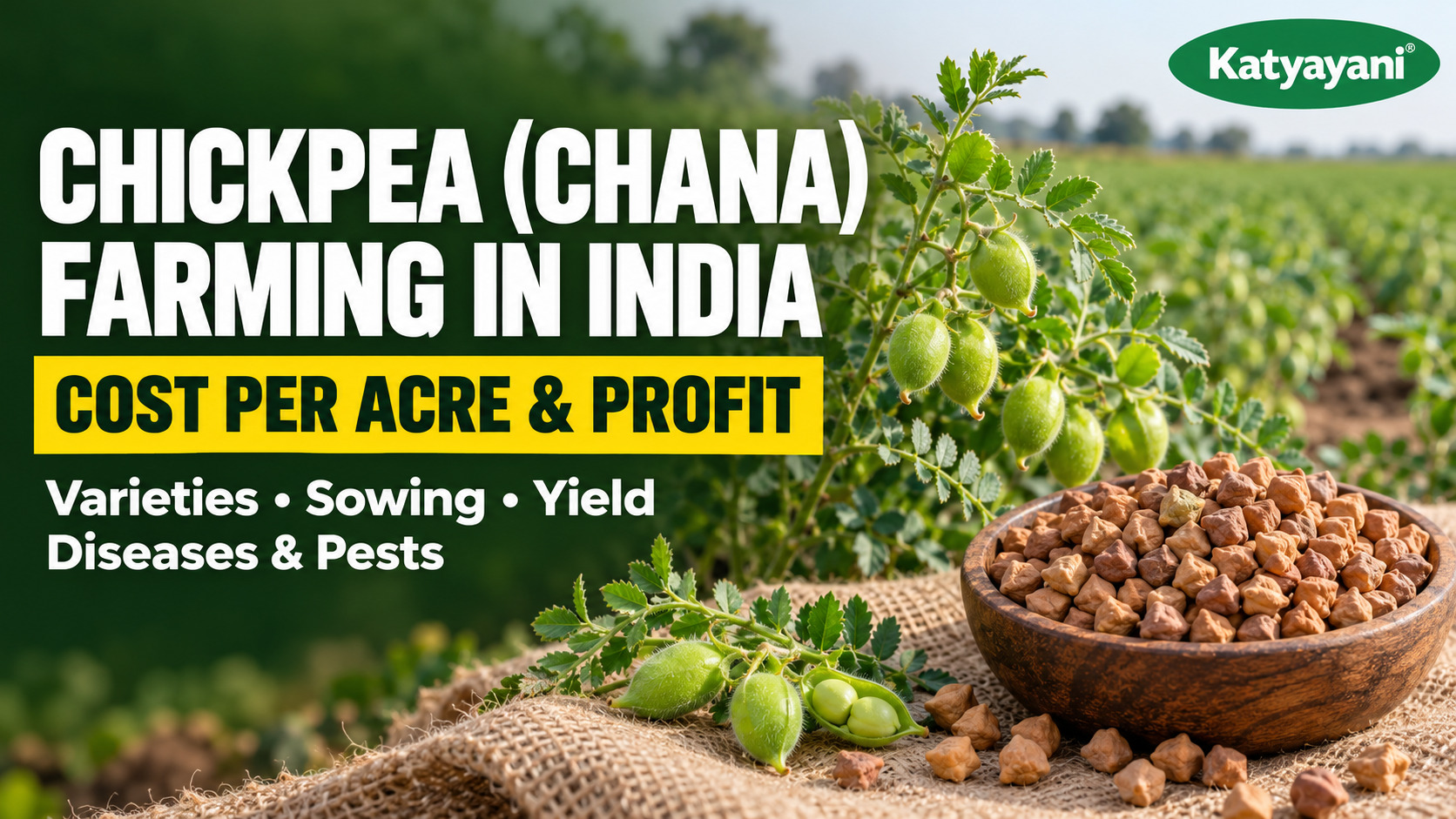
Chickpea (Chana) Farming in India: Varieties, Sowing, Diseases, Pests, Yield, Cost per Acre and Profit
Chana (chickpea, gram) is India's largest pulse. It is a cool-season rabi crop, sown from about mid-October to mid-November (earlier where it is rainfed), at roughly 75 to 80 kg seed per hectare for desi types, which is about 30 kg per acre. Treat the seed, give a phosphorus-led basal dose, irrigate once or twice at most, and watch for wilt in the early weeks and pod borer from flowering. The national average yield in the ICAR-IIPR report is 1,192 kg per hectare (2020-21), about 4.8 quintal per acre, while good package demonstrations gave about 1,611 kg per hectare, about 6.5 quintal per acre. At the 2027-28 MSP of Rs 5,958 per quintal that is about Rs 29,000 to Rs 39,000 gross per acre. Profit depends on your cost: at the all-India cost of production of Rs 3,751 per quintal, each quintal leaves about Rs 2,200. Check the live mandi price before you sell.
 17 min
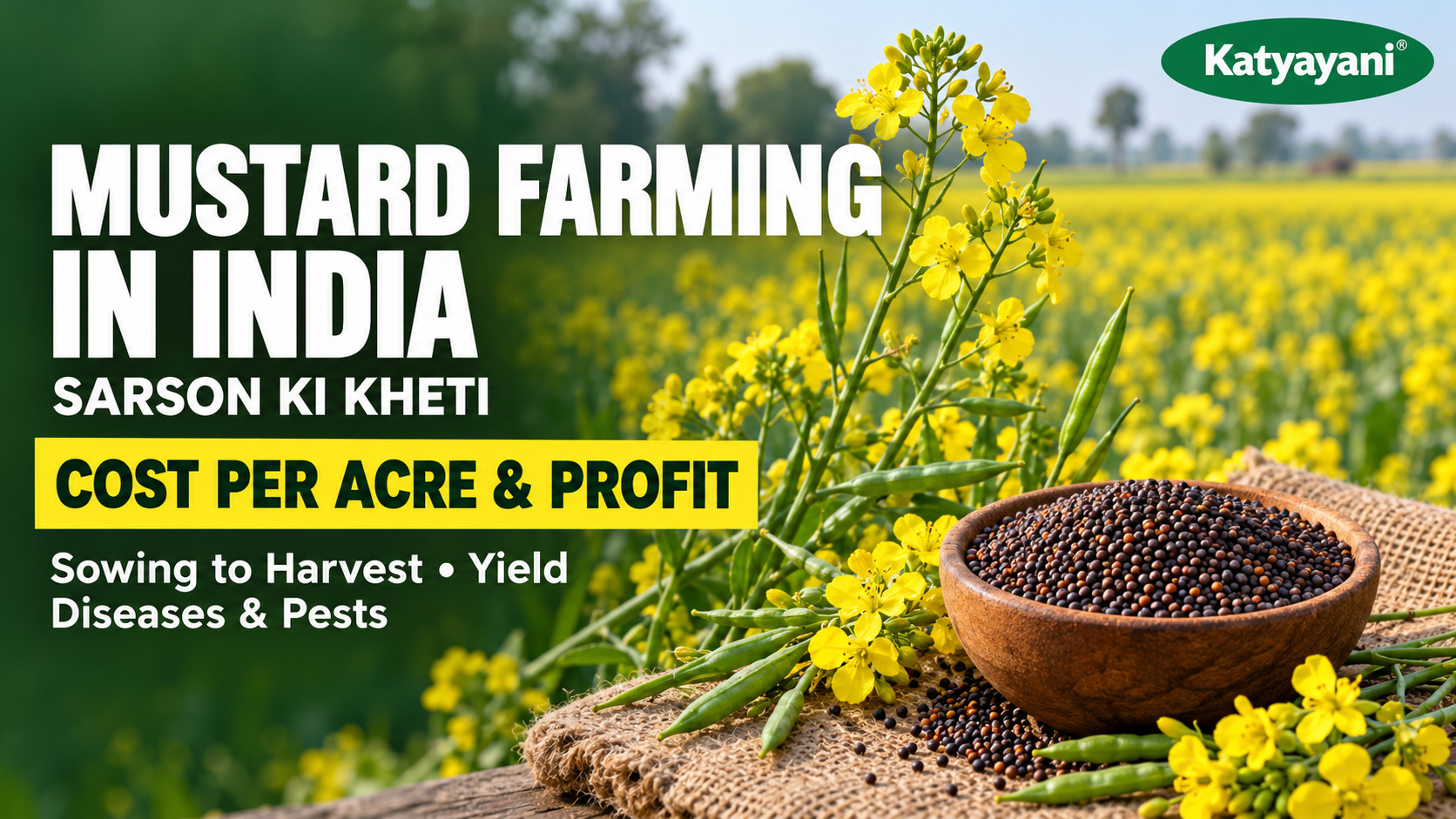
Mustard Farming in India: Cost per Acre, Sowing to Harvest, Diseases, Pests, Yield and Profit (Sarson Ki Kheti)
Mustard (sarson, rai) is India's main winter oilseed. Sow irrigated crops from about 10 to 25 October, use 1.6 to 2 kg seed per acre in rows 45 cm apart, give three irrigations, and watch for white rust, Alternaria blight and aphids from December. The national average yield is about 1,461 kg per hectare (about 5.9 quintals per acre) while good management and ICAR demonstrations reach 17 to 20 quintals per hectare (about 7 to 8 quintals per acre). The rabi MSP for 2027-28 is Rs 6,613 per quintal. A 2020 study put the cost at roughly Rs 18,000 per acre, so at MSP and 7 quintals per acre the crop leaves about Rs 29,000 per acre. Recent mandi rates have been higher than MSP, so check your local rate before you plan.
 14 min
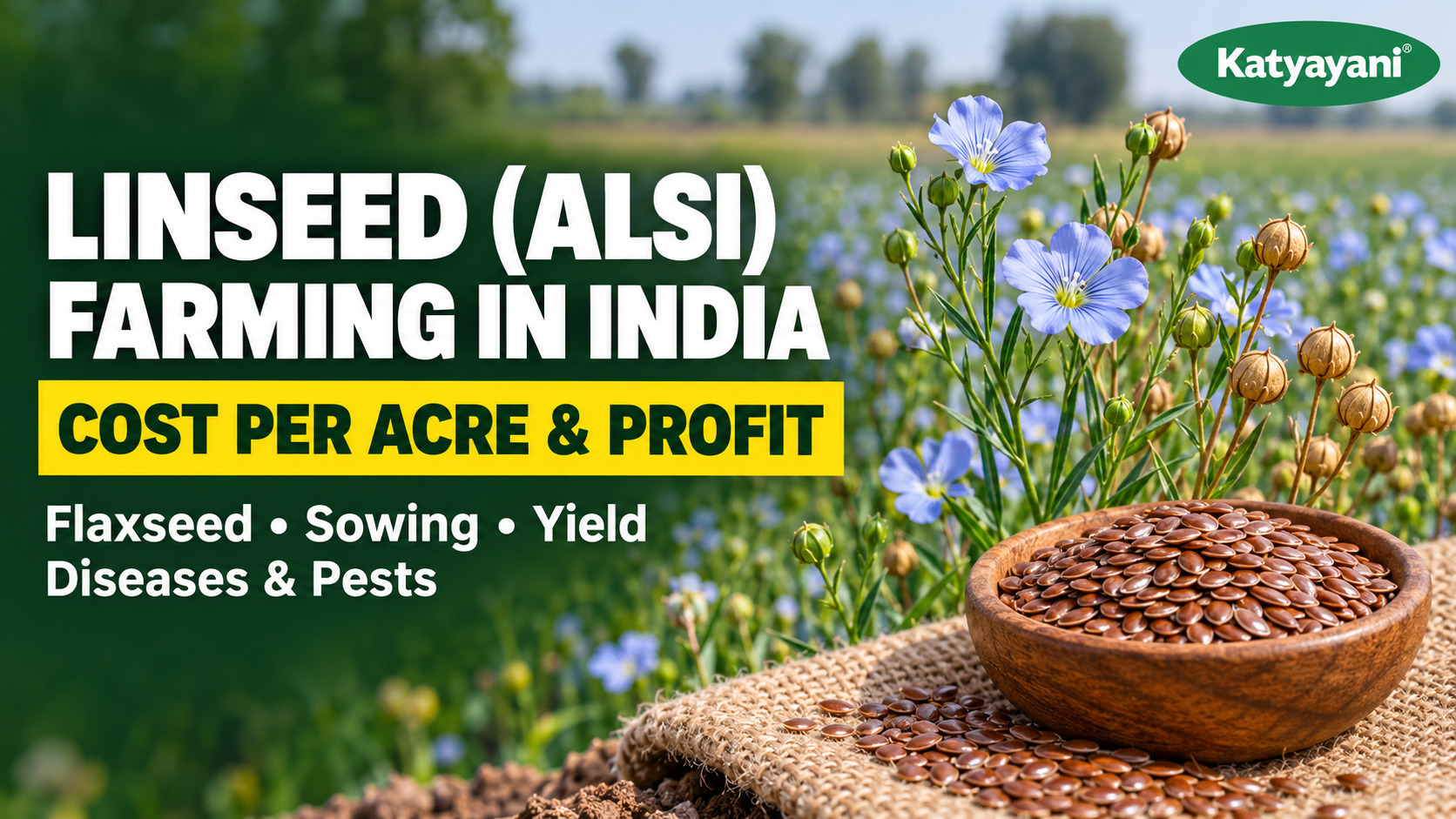
Linseed (Alsi / Flaxseed) Farming in India: Cost per Acre, Sowing, Diseases, Pests, Yield and Profit
Linseed (alsi, flaxseed) is a cool-season rabi oilseed grown on about 3 to 4 lakh hectares in India, mostly in Madhya Pradesh, Chhattisgarh, Uttar Pradesh, Maharashtra, Bihar and Odisha. Sow from about the first fortnight of October to mid November (rainfed) in lines, using roughly 8 to 12 kg of seed per acre, and treat the seed first. In KVK demonstrations with improved practice, farmers got about 3 to 6 quintals per acre; the national average is far lower, around 1.6 quintals per acre by one 2021 paper. Total cost in the studies read was roughly Rs 6,500 to Rs 10,400 per acre. Linseed is not covered by central MSP, so your profit depends on the local mandi price: use the break-even formula in this guide. The main field problems are rust, wilt, powdery mildew, Alternaria blight and bud fly; early sowing and seed treatment help with most of them.
 22 min
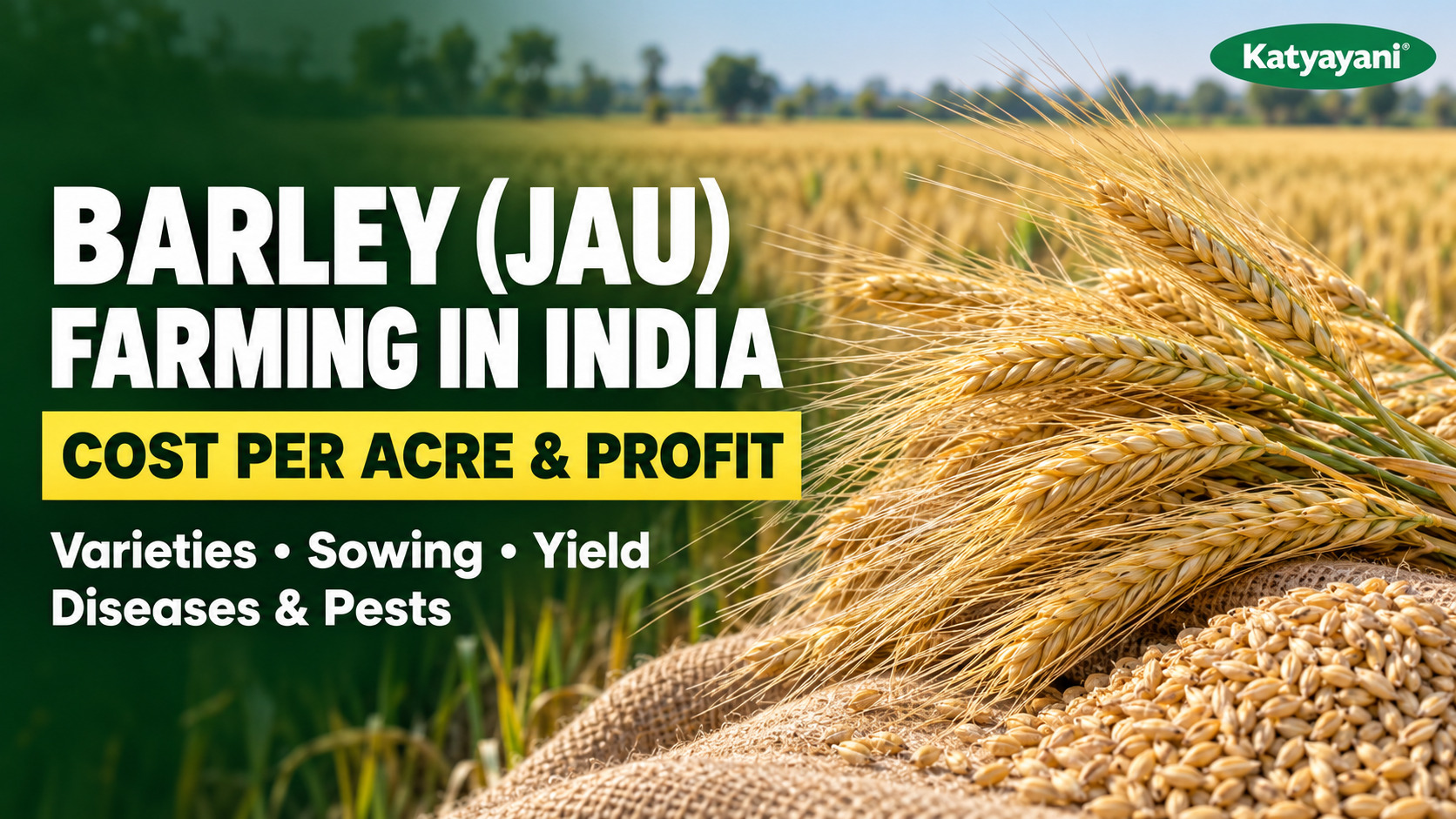
Barley (Jau) Farming in India: Varieties, Sowing, Diseases, Pests, Yield, Cost per Acre and Profit
Barley (jau) is a low-input rabi cereal. In north-west India, sow irrigated barley between 5 and 25 November (late sowing 1 to 20 December) at about 40 kg seed per acre (100 kg per hectare), with 3 irrigations, and expect about 16 to 22 quintal per acre from a good variety. The national average is nearer 12 quintal per acre. In a 2023-24 Haryana survey the full cost was about Rs 28,300 per acre and the net return about Rs 5,500. The 2027-28 MSP is Rs 2,286 per quintal. The main losses come from yellow rust, blotches, aphids and late sowing.
 14 min
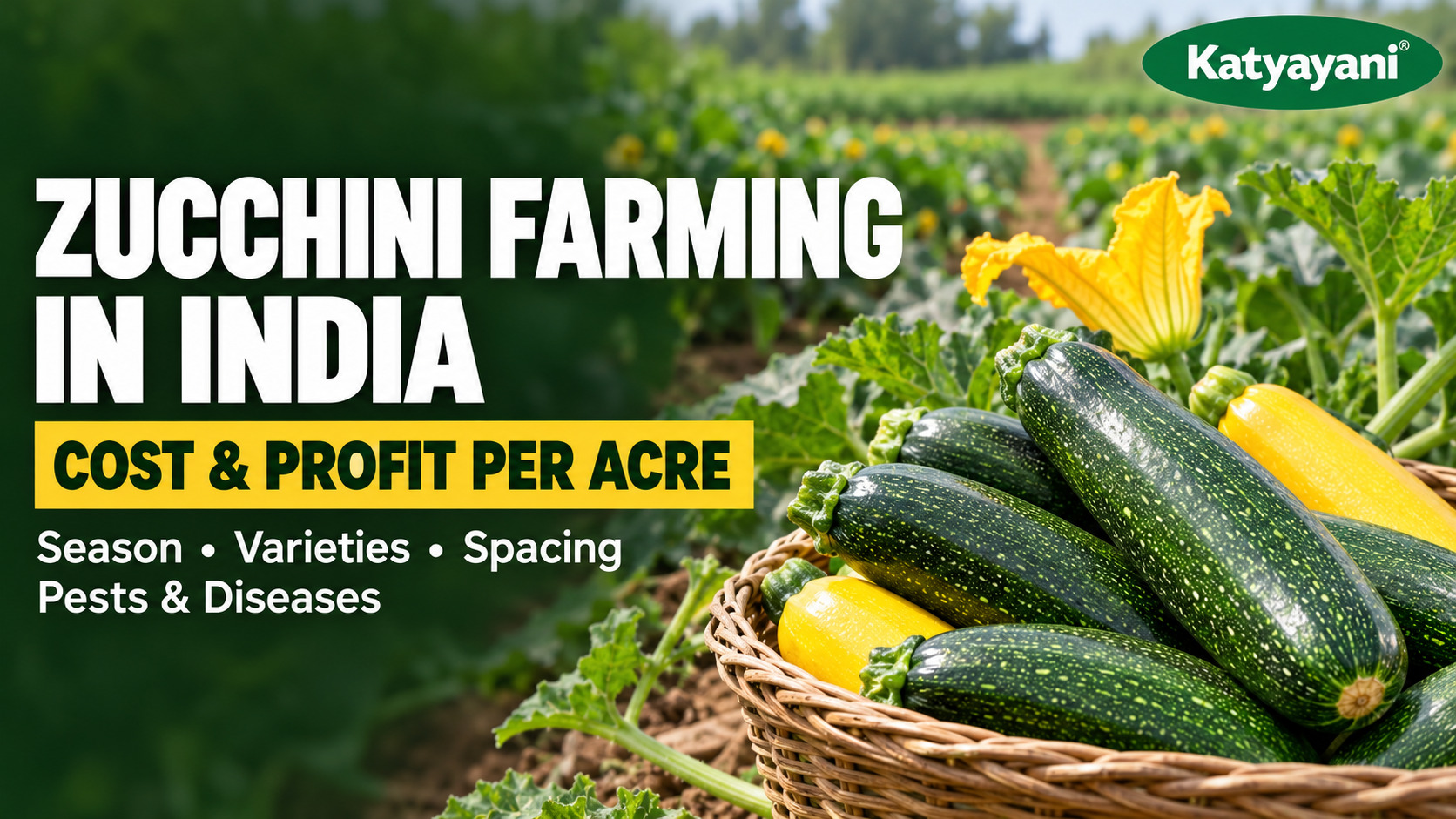
Zucchini Farming in India: Season, Varieties, Spacing, Pests and Diseases, Cost and Profit per Acre
Zucchini (summer squash, chappan kaddu) grows well in India, mainly as a winter crop in the north plains: ICAR-IIVR says sow 20 October to 10 November (also first half of February), and harvest starts about 55 days after sowing. It is a bush plant, so it needs no support. Winter yield is 25-40 tonnes per hectare, about 10-16 tonnes per acre; spring-summer yield is only 8-10 tonnes per hectare. The ICAR-IIVR study works out to about Rs 57,000 cost and Rs 1.76 lakh net profit per acre, but that assumes 32 t/ha sold at Rs 18/kg. Check your live mandi price before you plan on those numbers.
 15 min
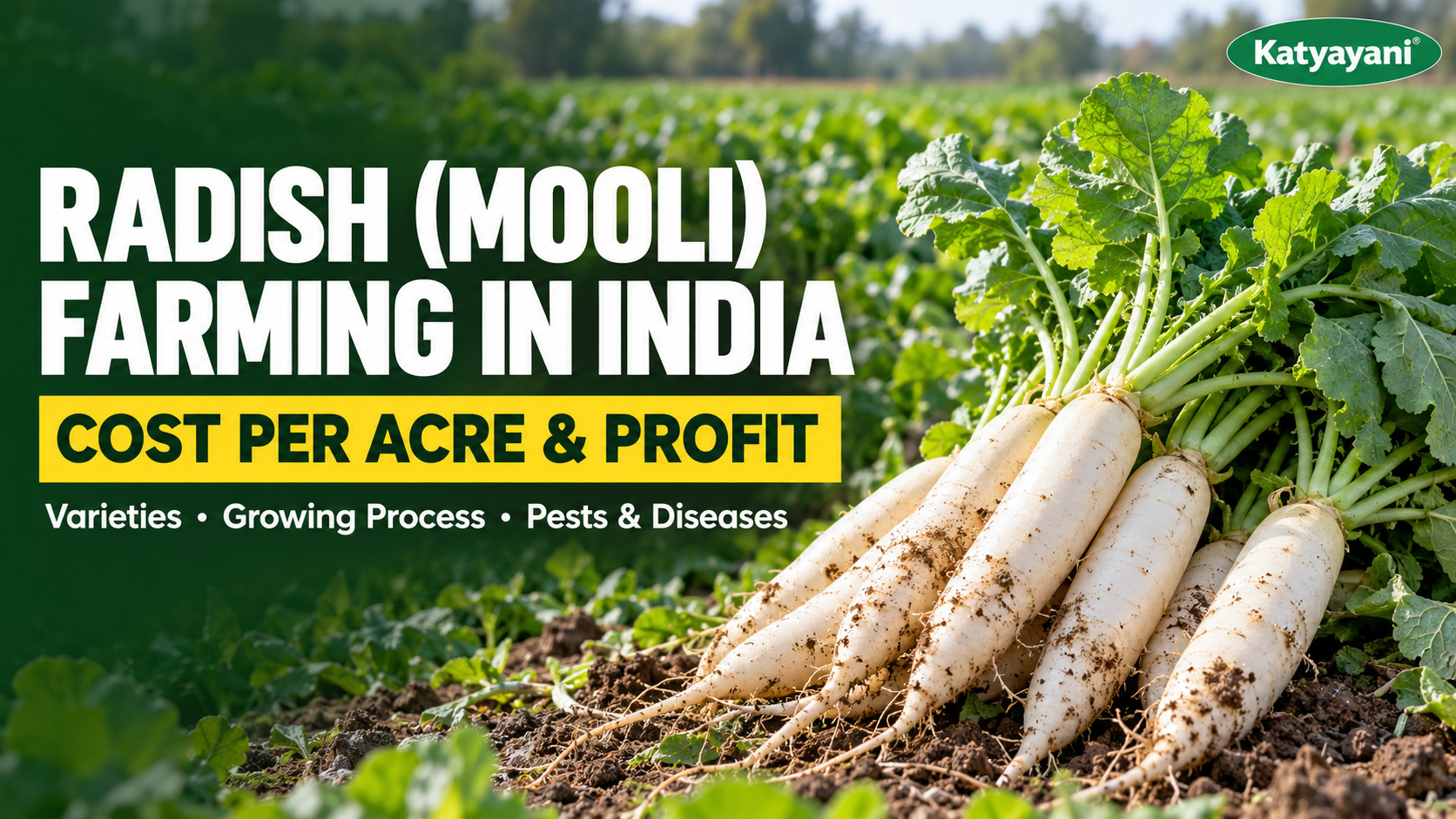
Radish (Mooli) Farming in India: Cost per Acre, Varieties, Diseases and Pests, Process and Profit
Radish (mooli) is a 25 to 60 day root crop. In India, grow the tropical (Asiatic) types such as Pusa Chetki, Pusa Desi, Pusa Reshmi and Japanese White in most places, and the temperate type Pusa Himani or White Icicle in cool months and hills. Use light sandy-loam soil with pH 6 to 7, 15 to 20 tonnes of well-rotted FYM per hectare (about 6 to 8 tonnes per acre), and 4 to 5 kg seed per acre. NHB puts yield at 25 to 35 tonnes per hectare for tropical types (about 10 to 14 tonnes per acre). One Kangra cost survey gives about Rs 40,550 per acre in total cost, and the break-even price at 10 tonnes per acre works out to about Rs 4 per kg. Profit is price-driven, so check your live mandi rate before you sow.
 17 min
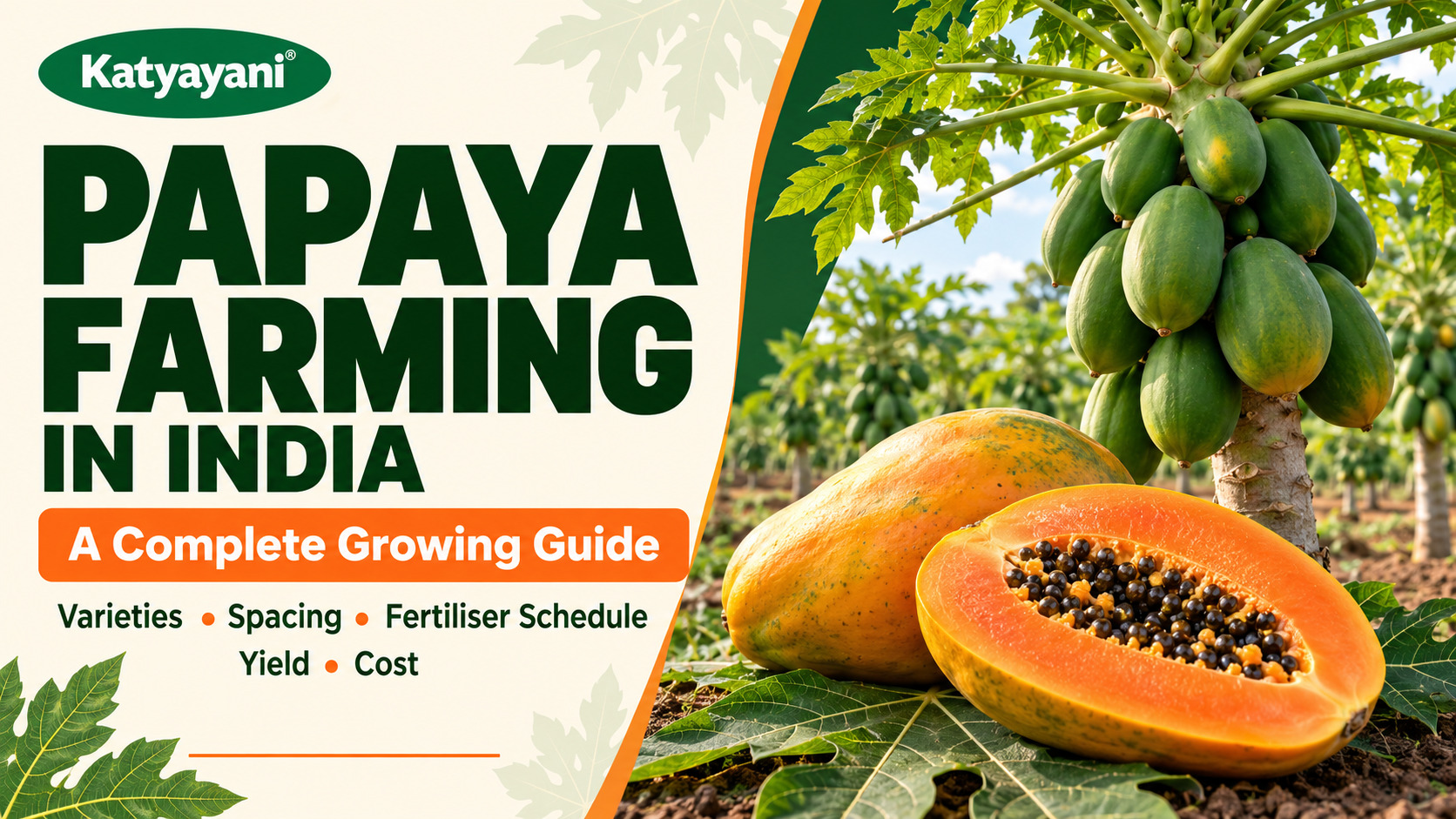
Papaya Farming in India: Varieties, Spacing, Fertiliser Schedule, Yield and Cost
Papaya is a fast fruit crop that gives its first harvest in about 8 to 14 months, depending on variety and place, and keeps bearing for 2 to 3 years in practice. It needs warm weather, a well drained sandy loam soil and no standing water. Red Lady 786 (Taiwan) is the most talked about hybrid; government varieties include CO 2 to CO 8, Pusa Delicious, Pusa Nanha, Coorg Honey Dew and ICAR-IIHR Arka Surya and Arka Prabhath. Spacing is 1.8 m by 1.8 m for normal planting (about 1,250 plants per acre by our arithmetic) and 1.5 m by 1.5 m for higher density. Feed with 10 kg farmyard manure per plant plus split NPK, and spray zinc and boron. Yield claims range from about 12 tonnes to 22 tonnes per acre across sources, so work out your profit from your own cost and market rate.
 11 min
Papaya Disease Management: An IDM Guide for Farmers (Ring Spot, Anthracnose, Foot Rot and More)
Papaya has no cure for its two worst diseases, ring spot virus and leaf curl virus. For these, management means clean seedlings, removing sick plants early and keeping aphids and whiteflies away. Foot rot and damping off come from wet soil and are best stopped by drainage, ring irrigation and seed or soil treatment before planting. Anthracnose and powdery mildew show on fruit and leaves and need clean orchards plus timely sprays. Integrated Disease Management (IDM) means doing all of these together, so you spray less and lose fewer plants. Use only products registered for papaya on the label (check CIB&RC), and confirm any dose with your horticulture officer.
 13 min
Cucumber Farming in India: Fertilizer Schedule, Pests, Diseases and Crop Protection
Cucumber is a warm-season crop that gives its first picking about 45 days after sowing. In India it is sown in spring-summer (Jan to Apr) and in the rainy season (June to July). TNAU gives a seed rate of about 2.5 kg per hectare with channels 1.5 m apart and hills 60 cm apart. Add well-rotted farmyard manure before sowing. The NIPHM package gives about 40:32:24 kg N:P:K per acre, with all phosphorus and potash at sowing and nitrogen split at 25 and 45 days. Water every week, trellis the vines, and scout for fruit fly, red pumpkin beetle, aphids and downy mildew from the start. Calcium and boron help fruit set and shape, and uneven water is the most common cause of bitter or crooked fruit.
 11 min
Chana Wilt Disease (Ukhta Rog): How to Spot It, What Causes It and How to Control It
Chana wilt (ukhta rog) is caused by a soil and seed borne fungus, Fusarium oxysporum f. sp. ciceris. It blocks the water vessels, so leaves droop, turn yellow and the plant dries, often in patches. Cutting the stem near the base shows brown to black streaks inside. The fungus can stay alive in soil or crop residue for up to 6 years, so there is no cure for a plant that has already wilted. Control is prevention: a wilt resistant variety, clean treated seed, a 3 to 4 year gap before chana returns to the same field, deep sowing in light soil and no moisture stress. Always check that it is not dry root rot or collar rot first.