Rabi & Horticulture Crop Guides
Explore Rabi and horticulture crop guides with practical tips on cultivation, nutrition, pest control, disease management, and better crop growth.
55 articles
 11 min
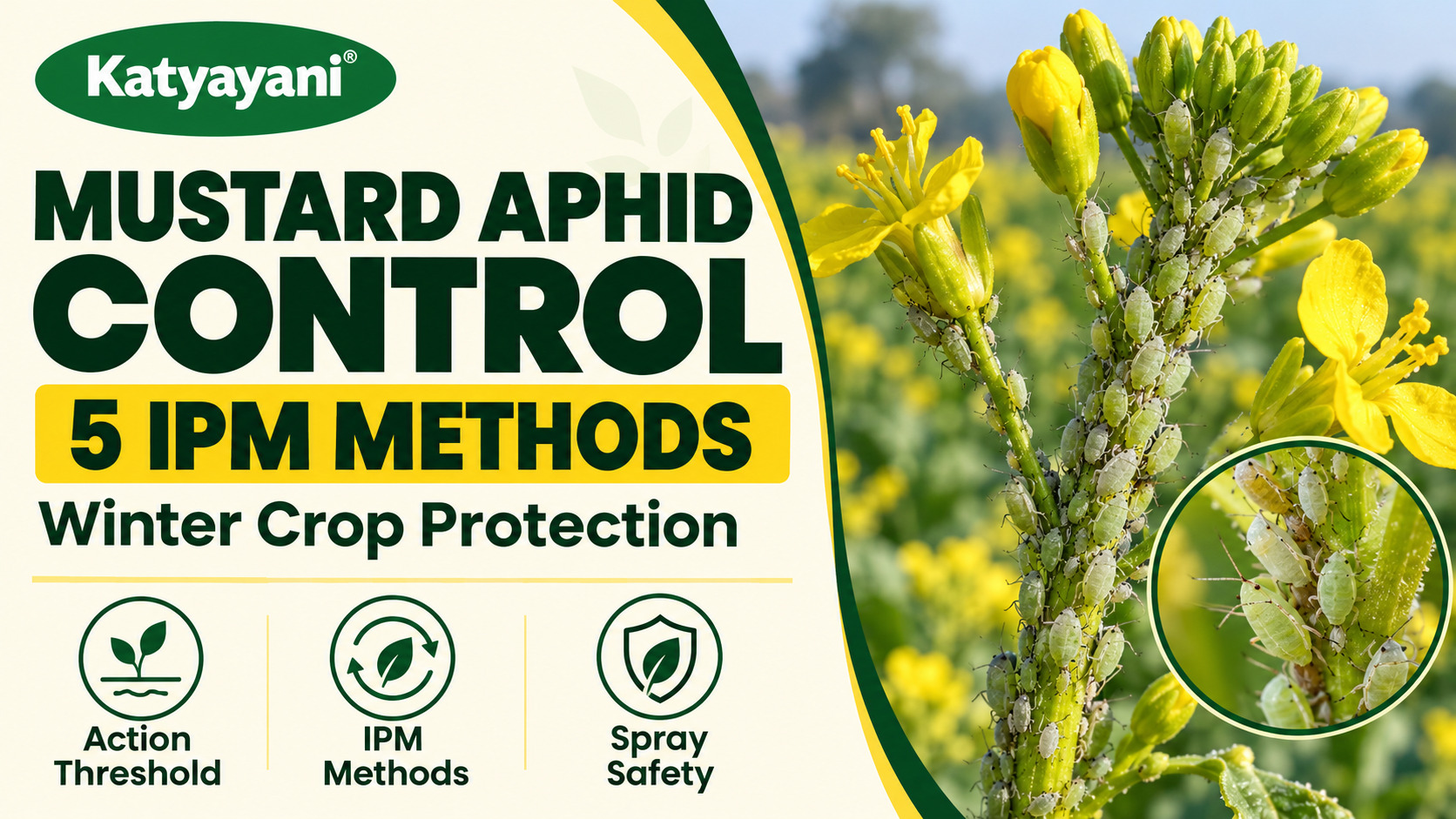
Mustard Aphid Control: Threshold, 5 IPM Methods and Safe Sprays for Winter
Control mustard aphid in this order. First sow on time with a tolerant variety. Then check the field every week from the start of December. Look at the top 10 cm of the main shoot, not only the leaves. Remove small infested patches by hand, and keep ladybirds and hover flies alive. Use neem oil 2 percent or neem seed kernel extract 5 percent while numbers are low. Spray an insecticide only when aphids cross the local threshold and natural enemies cannot keep up, use the label dose, and spray in the evening when bees are not active.
 12 min
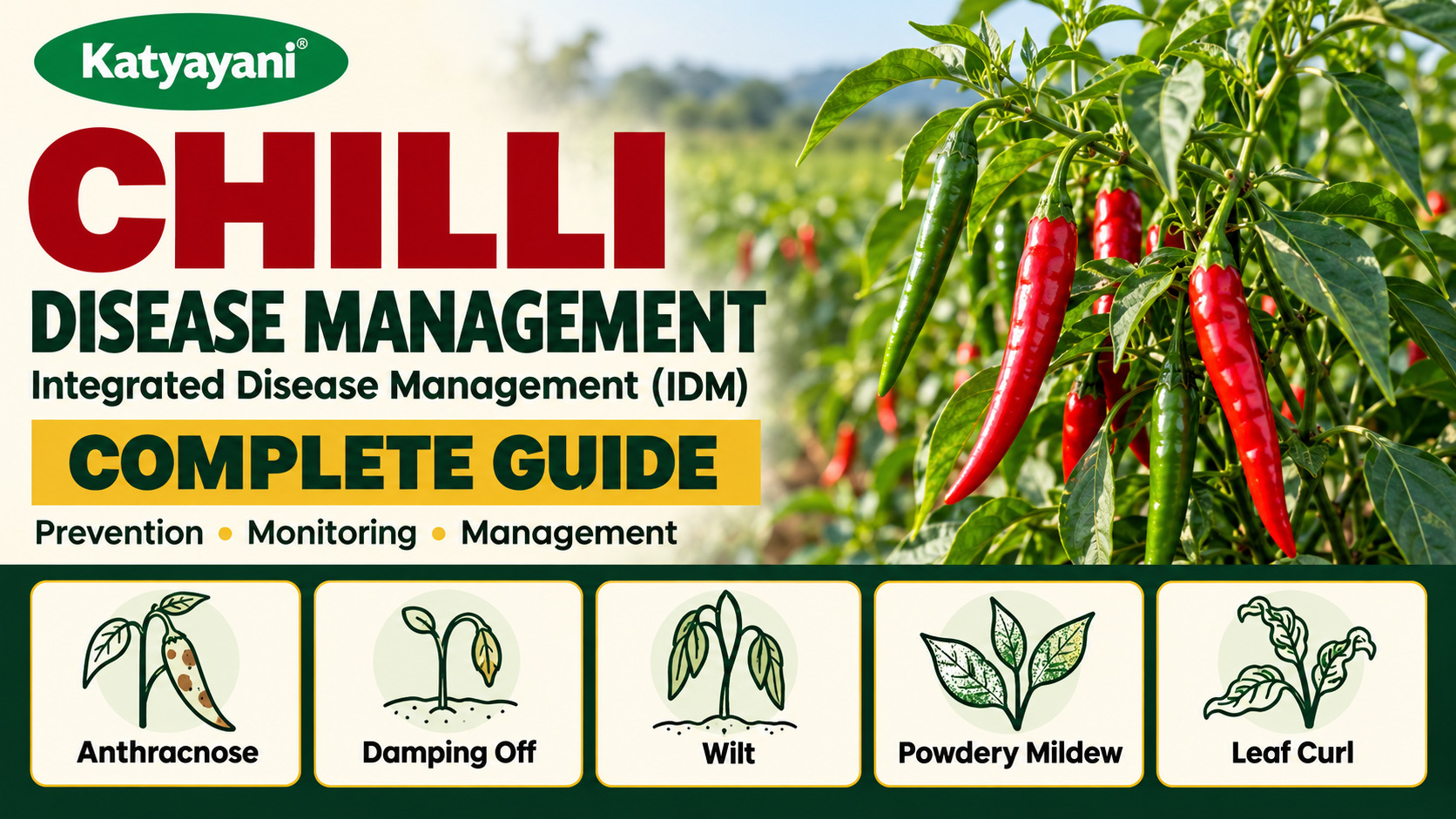
Integrated Disease Management (IDM) in Chilli: Complete Guide to Anthracnose, Damping Off, Wilt, Powdery Mildew and Leaf Curl
Integrated disease management (IDM) in chilli means using several steps together instead of relying on one spray. Start with healthy seed and a clean, well-drained nursery, treat seed with Trichoderma or Pseudomonas, use tolerant varieties, remove sick plants, control whiteflies against leaf curl, and spray a registered fungicide only when symptoms start, following TNAU timings. Anthracnose, damping off, powdery mildew, Cercospora spot, Fusarium wilt, bacterial wilt and leaf curl each need a different mix of these steps.
 11 min
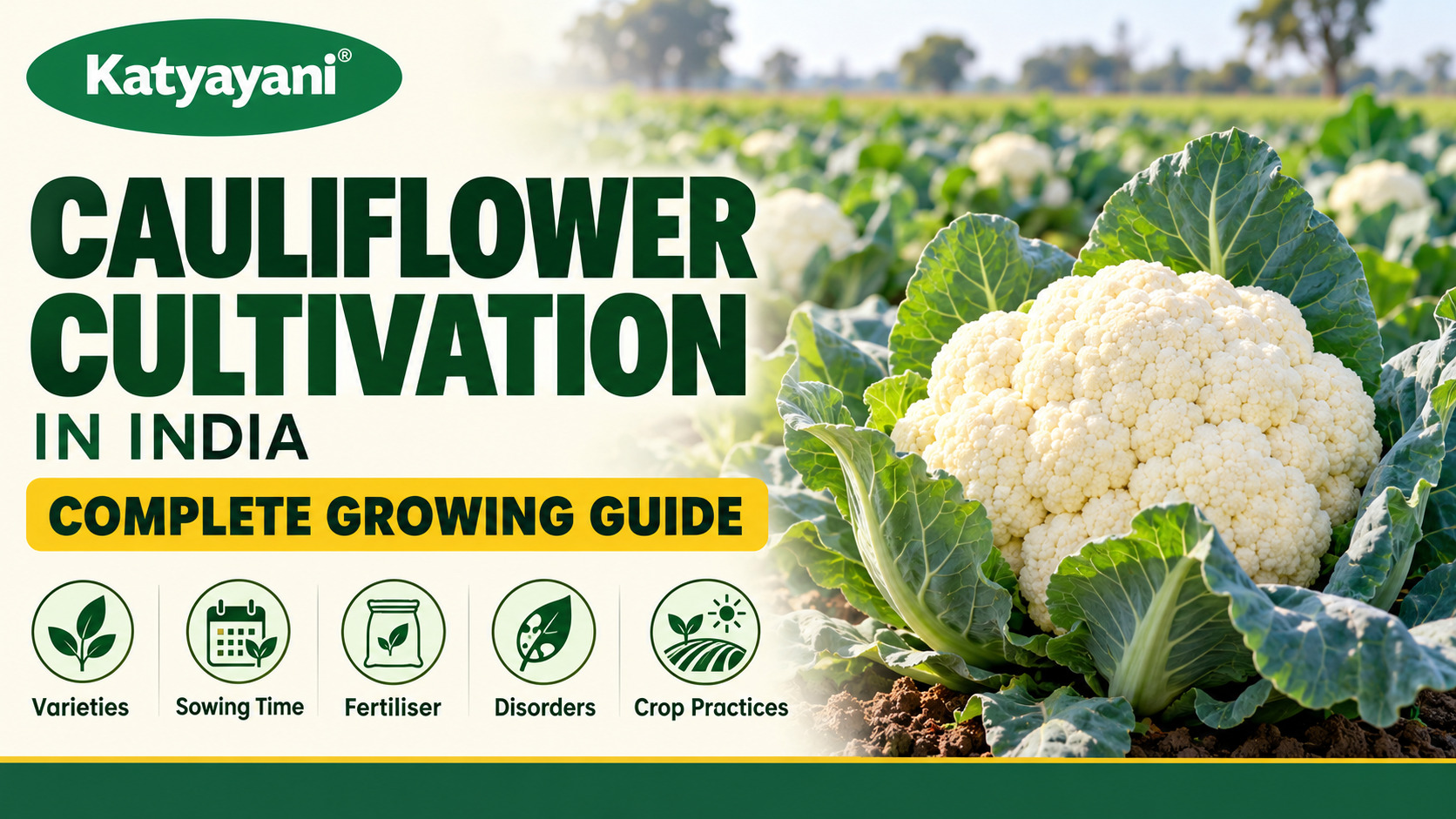
Cauliflower Cultivation in India: Package of Practices, Varieties, Sowing Time, Fertiliser and Disorders
Cauliflower is grown in India from early to late groups by sowing different varieties through the year. Raise seedlings in a nursery for 4 to 5 weeks, transplant at 45 x 30 cm (early) or 60 x 45 cm (mid and late), and give about 250 quintal of FYM per hectare with split nitrogen. Use age-correct seedlings and enough nitrogen to avoid buttoning, and pick a variety that matches your sowing month to avoid riceyness.
 11 min
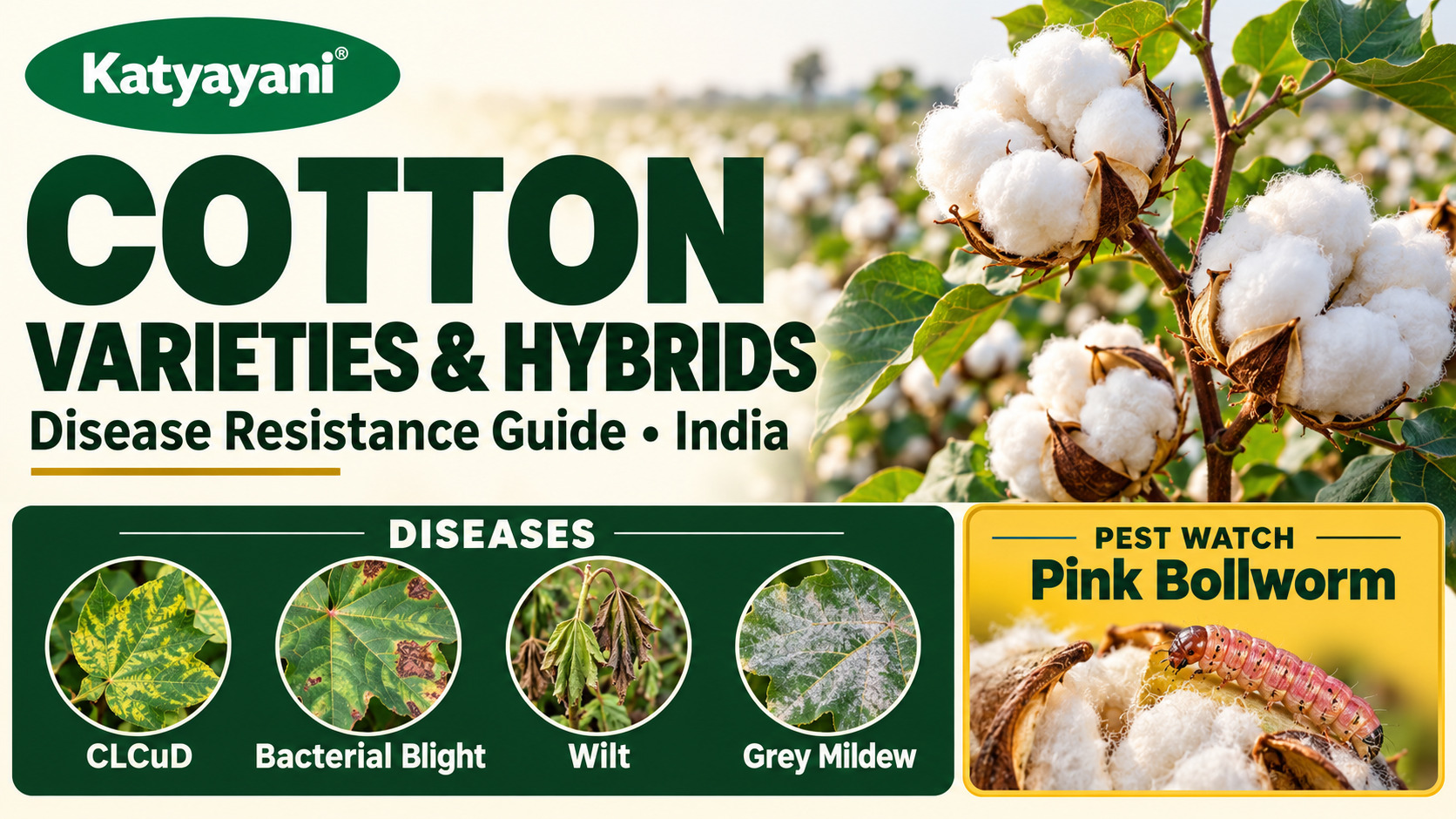
Disease Resistant Cotton Varieties and Hybrids in India: CLCuD, Bacterial Blight, Wilt, Grey Mildew and Pink Bollworm
No cotton hybrid sold in India is rated fully resistant to cotton leaf curl disease (CLCuD). Desi cotton (Gossypium arboreum) is the exception: ICAR-CICR says desi varieties are immune to CLCuD and tolerant to whitefly. For bacterial blight, grey mildew and root rot, TNAU lists the CICR variety Suraksha as resistant. Only GEAC-approved Bt cotton is legal, so buy sealed Bt seed with a bill, choose short to medium duration, and sow on time.
 14 min
Sugarcane Farming in India: Varieties, Planting, Diseases, Pests and Step-by-Step Management
Sugarcane is a 10 to 12 month crop that is planted from two-budded setts in spring (Feb to Mar) or autumn (Sep to Oct) in north India, and in the main season (Dec to May) in Tamil Nadu. Treat the setts, plant 12 buds per metre of furrow, apply nitrogen and potash in splits, irrigate by growth stage, keep the field weed-free for the first 3 to 4 months and use disease-free seed. Red rot, smut, wilt and grassy shoot spread through seed cane, so clean seed is the cheapest protection. Borers, termites and aphids are best handled by scouting, trash management and natural enemies first.
 11 min
Disease Resistant Chilli Varieties in India: Leaf Curl, Anthracnose, Powdery Mildew, Wilt and Virus Tolerant Picks
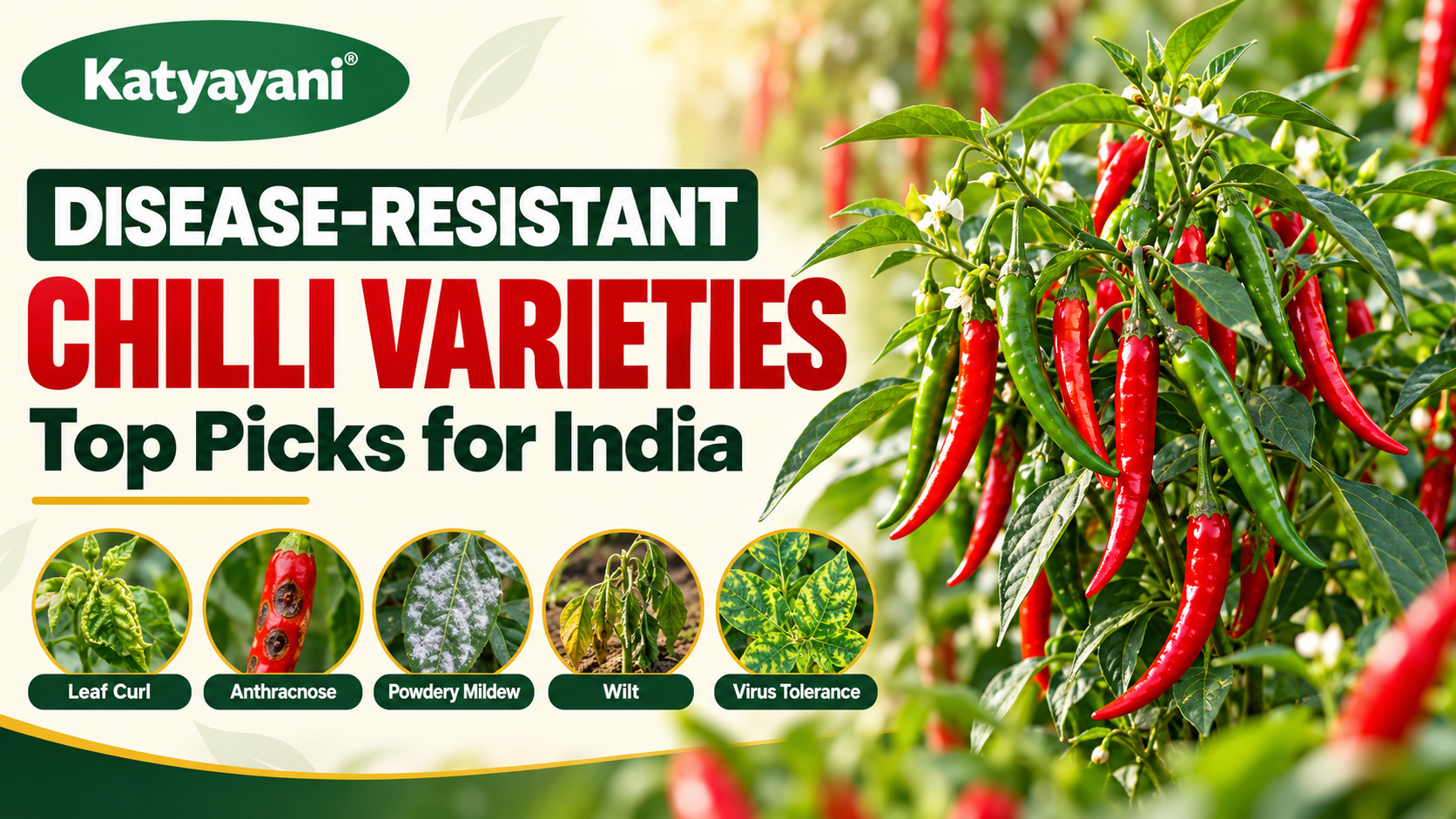
There is no chilli that is fully immune to every disease. What farmers can buy are varieties rated tolerant or moderately resistant to one or two problems. For leaf curl, ICAR-IIHR lists Arka Yashasvi, Arka Gagan and Arka Tanvi, IIVR lists Kashi Garima and Kashi Ratna, and PAU lists Punjab Sindhuri and Punjab Tej. For powdery mildew, look at Arka Harita and Arka Suphal. For bacterial wilt, Kerala's Ujwala and Anugraha. Match the variety to your state and your main disease.
 11 min
Best Coriander Varieties for High Yield in India: Seed Type, Leaf Type, Sowing Time and Disease Resistance
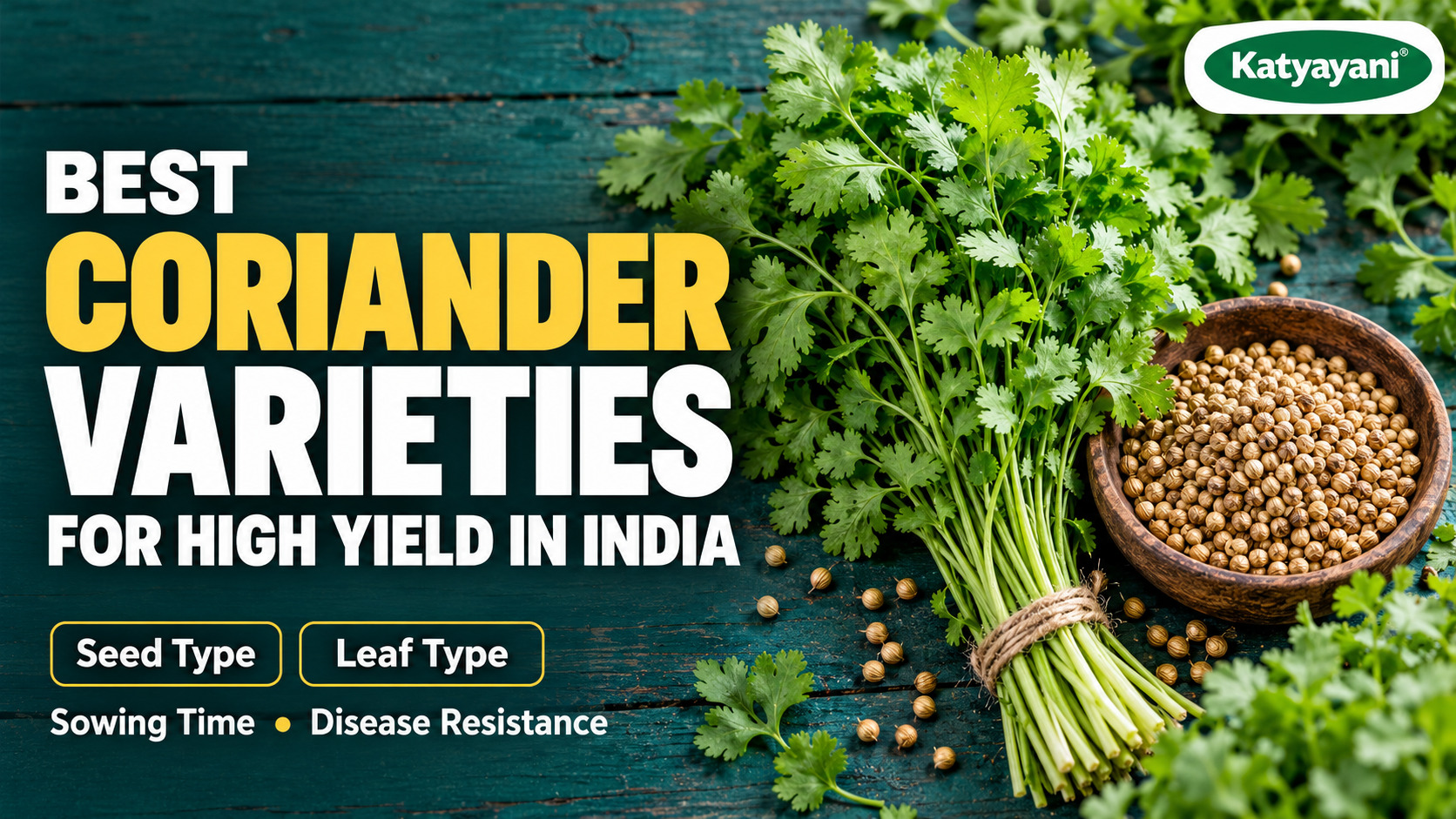
There is no single best coriander variety for every farm. For seed in the north and west, the ICAR-NRCSS Ajmer varieties ACr-2 (about 1,293 kg per hectare in 25 national trials) and ACr-3 (about 1,689 kg per hectare in 17 trial entries) are the best documented, and ACr-1 is the pick for fields with stem gall. For green leaf, AGCr-1 and Hisar Bhoomit are the leaf-focused releases. In the south, CO and Andhra varieties such as Sadhana and Sindhu fit rainfed land. Sow in October to early November where winters are dry, and treat the seed.
 11 min
Watermelon Farming in India: Package of Practices, Season, Spacing, Fertiliser, Pollination and Harvest
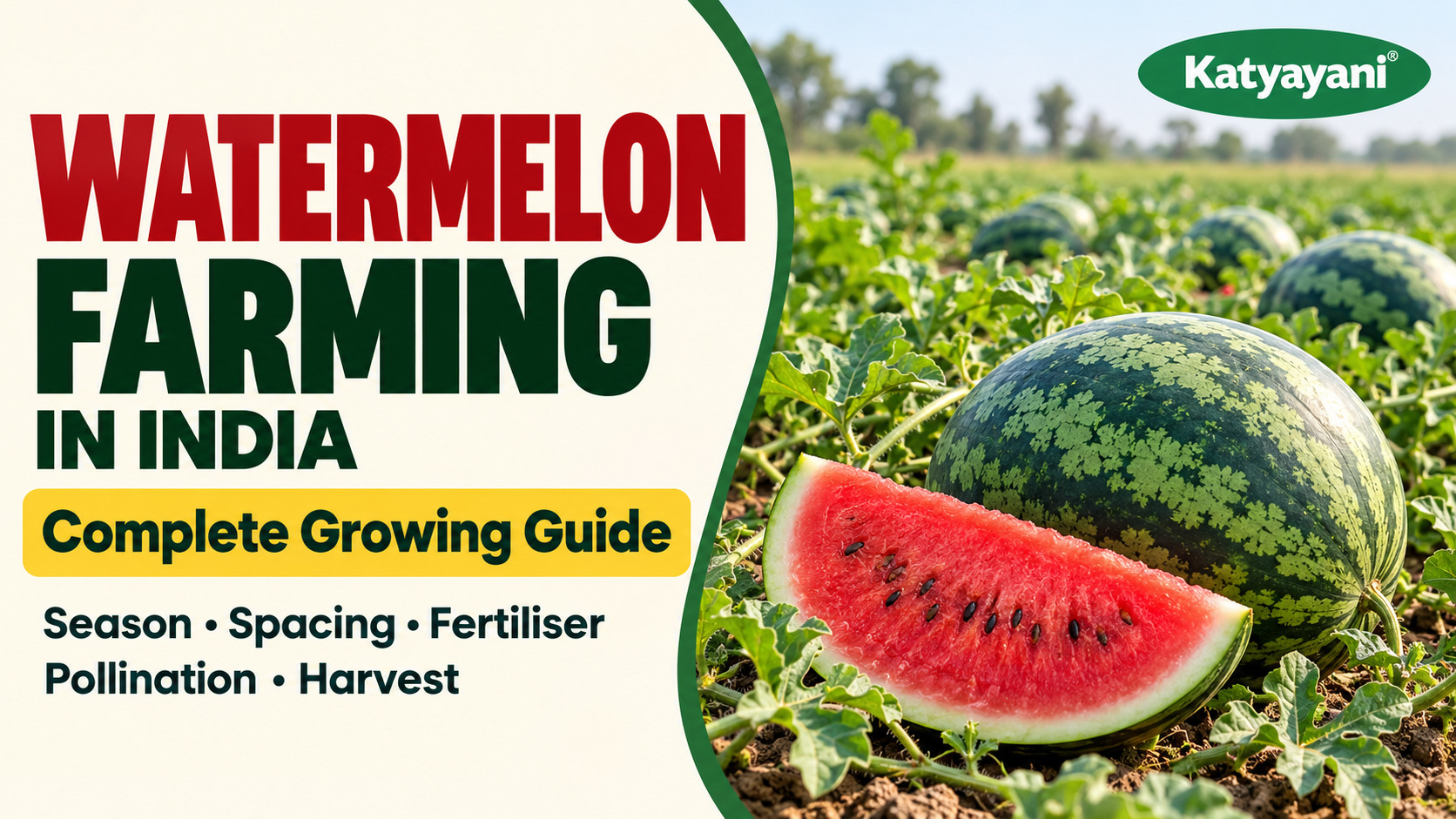
Watermelon needs warm weather and well-drained sandy loam with pH 6.5 to 7.5. TNAU suggests about 3.5 kg of seed per hectare, channels 2.5 m apart with hills 0.9 m apart, 20 t FYM per hectare and 200:100:100 kg NPK in splits. Bring honey bees at first flowering, irrigate often early and less near ripening, and harvest when the tendril near the fruit dries, the ground spot turns yellow and the sound is dull.
 15 min
Greenhouse Farming in India: Types, Cost, Subsidy, Crops and Profit
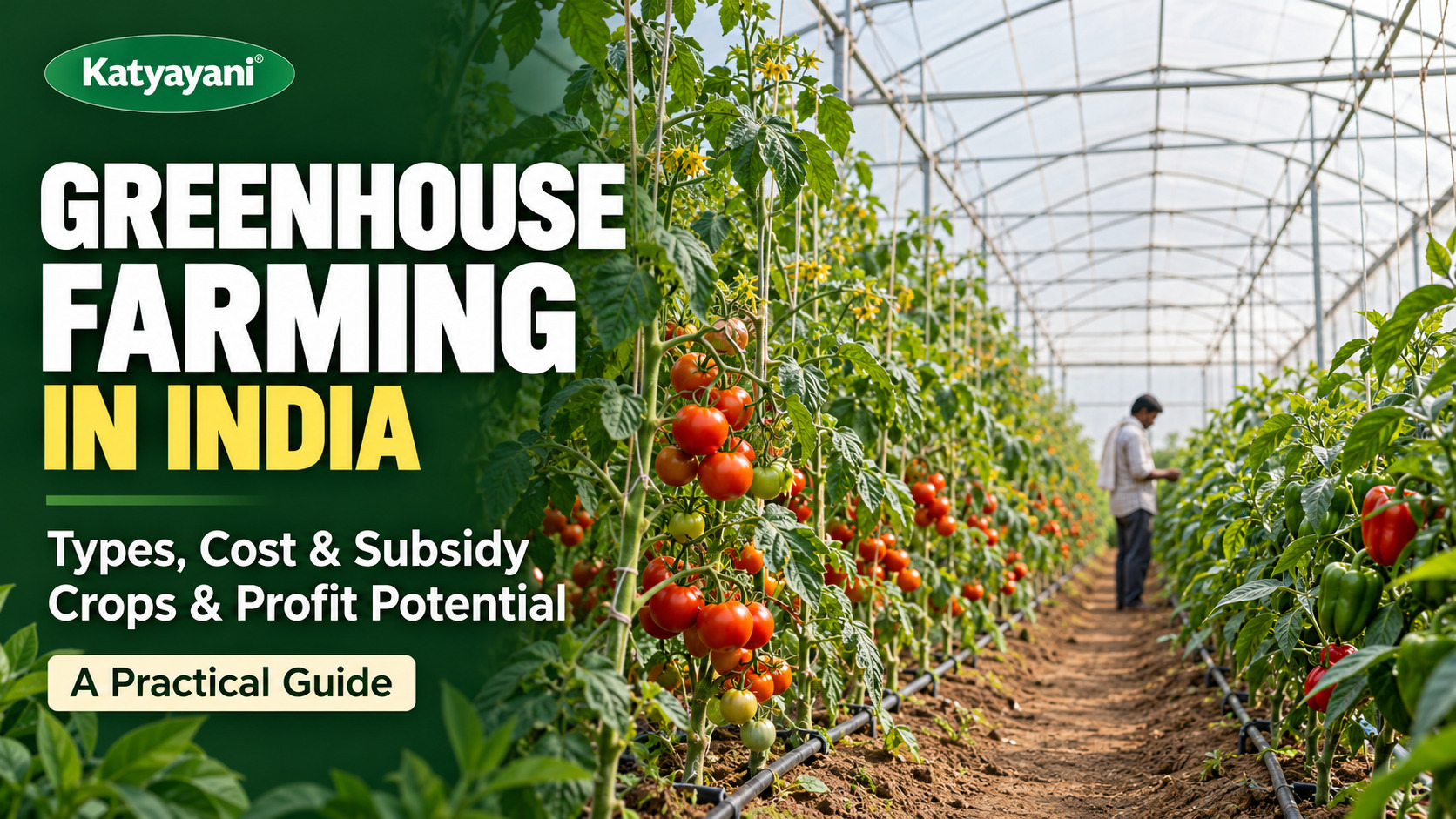
Greenhouse farming is growing crops inside a covered structure where temperature, humidity, light and water are managed, so plants can grow through the year or out of season. In India most structures use UV plastic film on a galvanised pipe frame. Cost ranges from about Rs 300 per sq m for simple designs to Rs 3,500 per sq m for fully automated ones (TNAU).
 11 min
Cool Season Crops: List, Planting Time, Soil Temperature and Frost Tolerance
Cool season crops are plants that grow best in cool weather, roughly 15 to 24 degrees C, and tolerate light to hard frost. Examples are spinach, lettuce, peas, cabbage, cauliflower, carrot, radish and onion. They are sown in autumn or early spring, and in India mainly from October to December (rabi). Most bolt when days lengthen or heat arrives.
 10 min
Pea Farming in India (Matar): Varieties, Sowing Time, Fertiliser, Diseases and Harvest
Sow pea (matar) from mid-October to mid-November in the plains. Use good seed coated with Rhizobium, keep rows about 30 cm apart, and give a small starter dose of fertiliser. Spray sulphur as soon as you see white powder on the leaves. Early varieties give the first green pods in about 65 to 70 days. Pick pods every 7 to 10 days while they are tender.
 11 min
Garlic Farming in India: Sowing Time, Fertilizer and Cost Per Acre
Sow garlic cloves from the last week of September to November. October to early November is best for most northern and central plains. Use about 200-240 kg of cloves per acre, planted about 15 cm by 10 cm apart. Treat the cloves before planting. Harvest comes 130-150 days later. Good crops give 32-48 quintals per acre. The cost changes a lot by state and seed price.