Organic & Bio Inputs
Explore organic and bio-input products from Katyayani Organics to support plant growth, improve soil health, and promote sustainable farming. Find the right solutions for your crops.
15 articles
 16 min
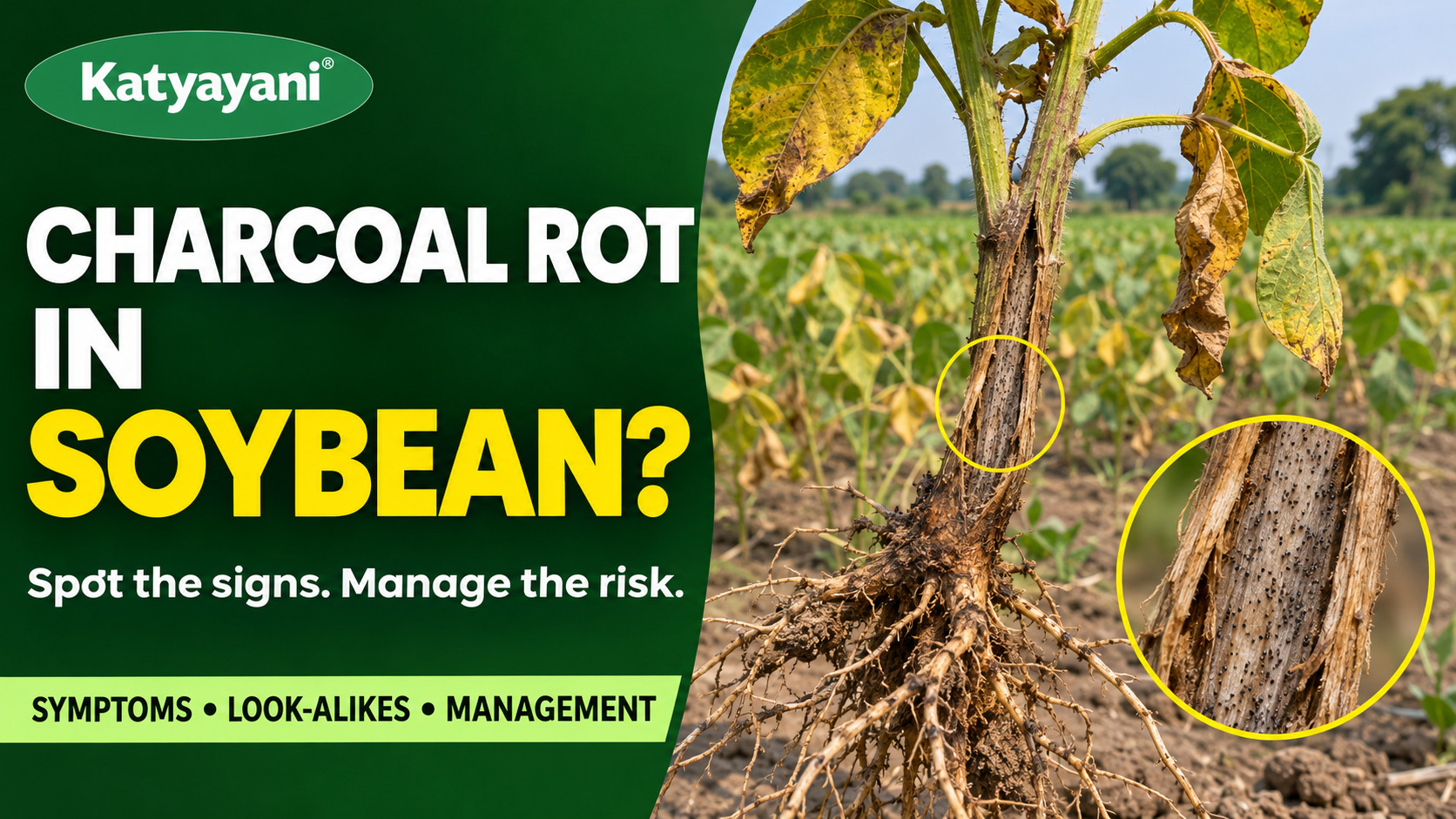
Charcoal Rot in Soybean: Causes, Symptoms, Look-alikes and How to Manage It in India
Charcoal rot is a soil-borne fungal disease (Macrophomina phaseolina) that infects soybean roots early but shows up only when heat and drought stress hit around flowering and pod fill. Plants in the driest or most compacted patches wilt and die early with leaves still hanging, and splitting the taproot shows silver-grey tissue with tiny black specks (microsclerotia). The fungus lives in soil and residue for years and can ride on seed. Nothing in the sources rescues a wilted plant, so the work is done before and at sowing: clean seed, a seed treatment backed by your state recommendation, rotation with cereals, a well-drained and not over-dense crop, and moisture protection during dry spells. Confirm the cause by splitting the stem before you spray anything.
 17 min
Biofertilizers and Organic Manures in Marigold: FYM, Vermicompost, Azotobacter, PSB, Doses per Acre and an Integrated Nutrient Plan
Marigold responds well when manure and biofertilizers replace part of the chemical fertiliser, not when they are added on top of a full dose. Most Indian sources put well-rotted FYM at 25 to 30 tonnes per hectare (roughly 10 to 12 tonnes per acre), mixed in at the last ploughing. TNAU gives Azospirillum and phosphobacteria at 2 kg per hectare each, mixed with FYM. Trials from Saharanpur, Faizabad and Raipur found the best flower yield with about 50 to 75 percent of the chemical dose plus vermicompost or FYM and Azotobacter, Azospirillum or PSB. Keep biofertilizers away from fungicides, and use Trichoderma as a preventive soil treatment, not a cure.
 17 min
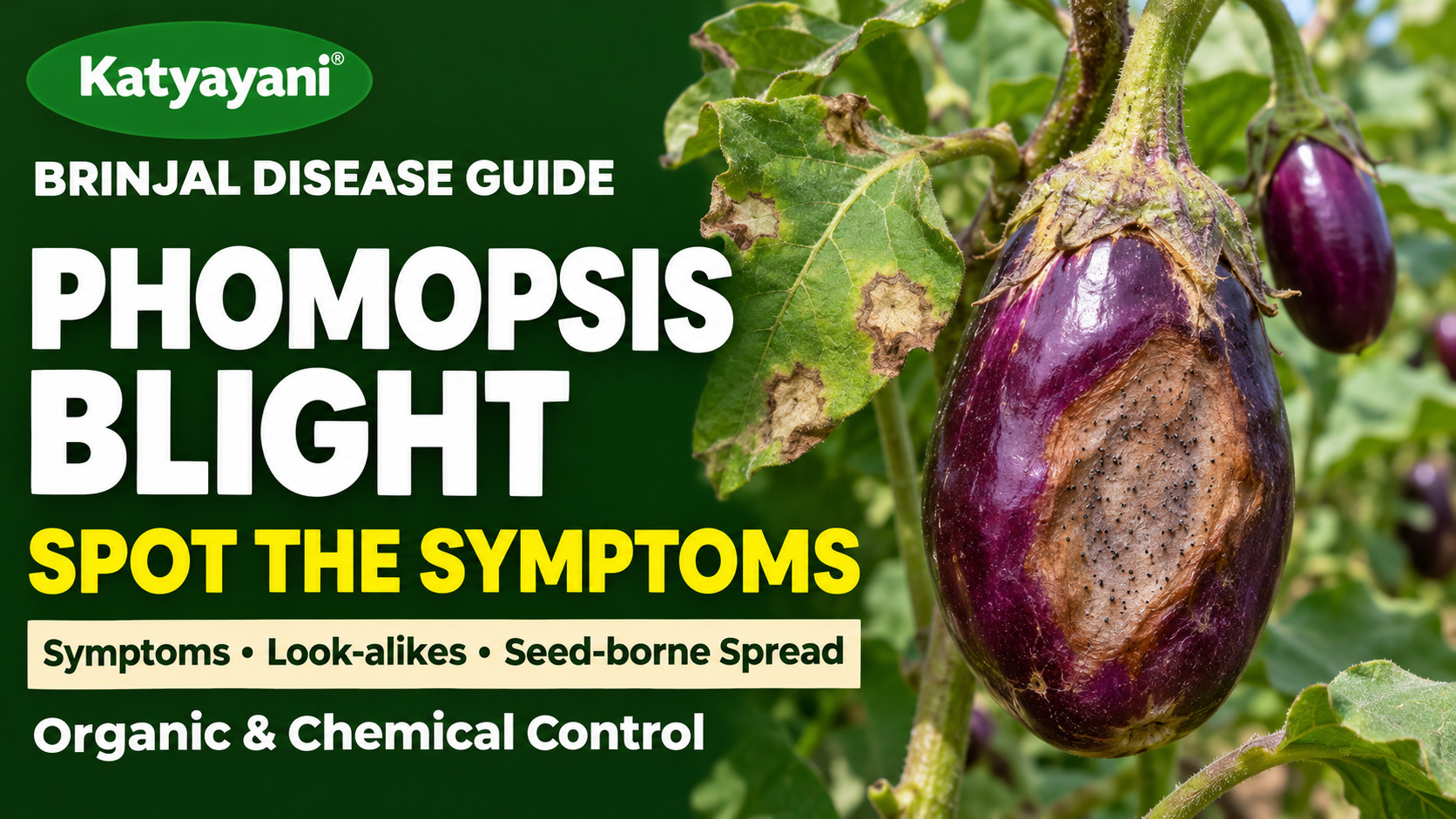
Phomopsis Blight in Brinjal: Symptoms, Look-alikes, Seed-borne Spread and Organic and Chemical Control
Phomopsis blight (Phomopsis vexans) shows as irregular brown spots with dark margins on brinjal leaves, petioles and stems that join into blight, and as sunken spots on fruit that turn soft, then black and mummified. The fungus lives in seed, crop debris and soil, so start clean: healthy seed, hot water or labelled seed treatment, a fresh nursery bed, removal of infected debris, crop rotation, wider spacing and irrigation timed so leaves dry fast. Trichoderma and Pseudomonas are used preventively at seed, root and soil stage. When spots spread, use a fungicide registered for brinjal on the CIB&RC list, at the label dose, and follow the pre-harvest interval on the pack.
 17 min
Plant Growth Promoters: Types, Uses, Rules in India and How to Pick the Best Product
A plant growth promoter is any input sold to push growth, rooting, flowering, fruit set or stress tolerance. In practice the label covers three different things: plant growth regulators (hormone-type chemicals such as gibberellic acid and NAA, registered by CIB&RC under the Insecticides Act, 1968), biostimulants (seaweed, humic and fulvic acid, amino acids, regulated under the Fertiliser (Control) Order, 1985) and beneficial microbes (biofertilisers and PGPR bacteria). They work differently, carry different over-use risks and need different paperwork. Use them on a healthy crop at the right stage, at label dose, and never as a replacement for nutrition, water or pest control.
 11 min
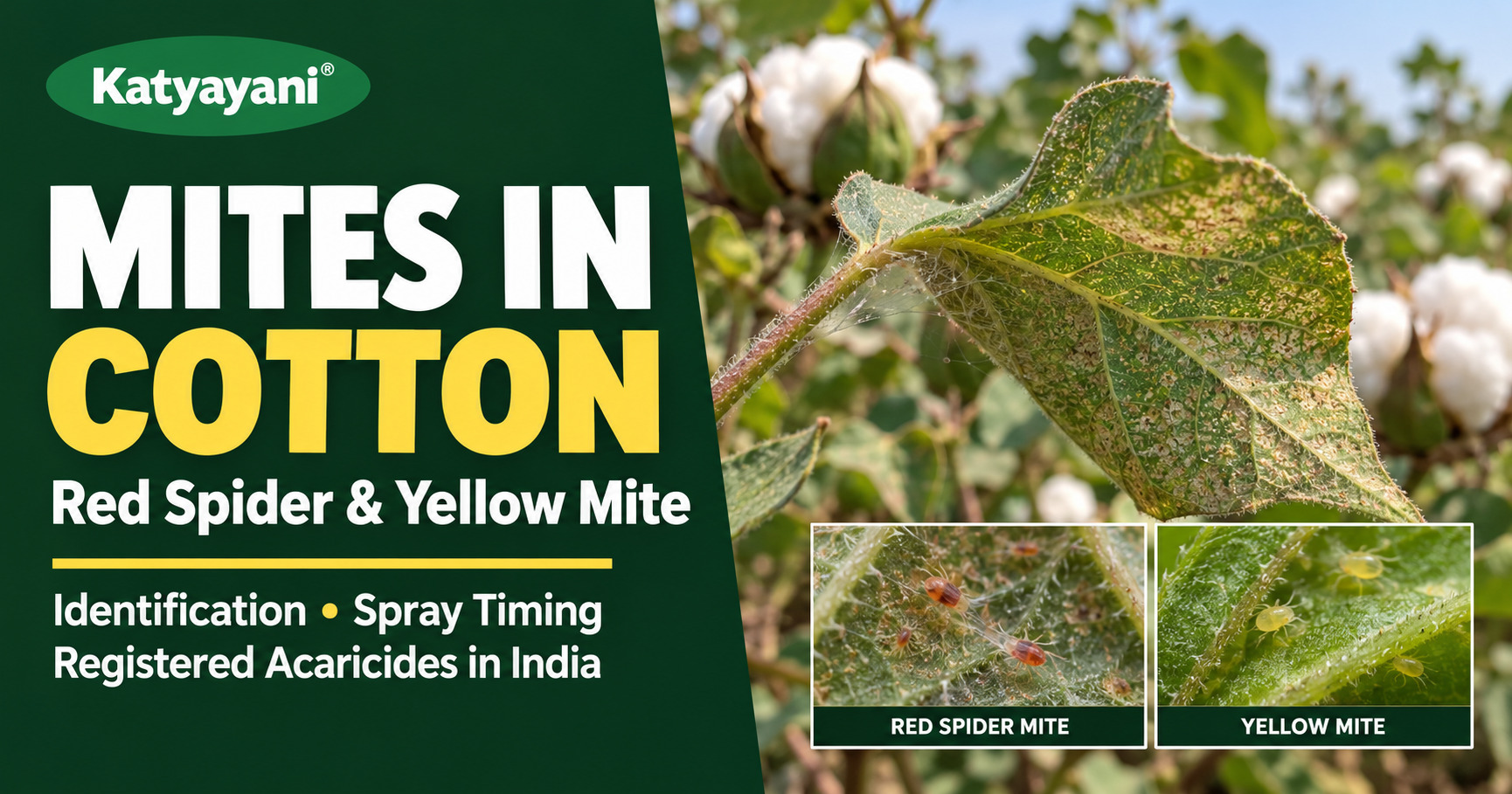
Mites in Cotton: How to Identify Red Spider and Yellow Mite, When to Spray and Which Acaricides Are Registered in India
Cotton mites are tiny sucking pests that live on the underside of leaves. The red spider mite (Tetranychus) causes pale speckles that turn bronze or red, with fine webbing. The yellow or broad mite (Polyphagotarsonemus latus) makes young top leaves curl, harden and stay small. Check leaf undersides with a 10x lens, scout twice a week in hot, dry spells and act only when mites are spreading, not on a few plants. In the CIB&RC list (up to 30 September 2025) only two single-ingredient acaricides have a cotton row that names mites: spiromesifen 22.9 percent SC and fenpyroximate 5 percent EC. Rotate, spray the leaf underside with 500 litres of water per hectare, and avoid pyrethroid and similar sprays that kill the mites' natural enemies and make mites flare.
 14 min
How to Choose the Right Agricultural Sprayer for Herbicides, Fungicides and Insecticides
Pick the sprayer by the job. For up to about 2 to 3 acres, a 16 litre knapsack sprayer (manual or battery) is enough. For 5 acres or more, or for tall crops and orchards, a petrol power sprayer saves time. Use a flat fan nozzle for broadcast herbicide spraying, because it gives coarse droplets that drift less. Use a hollow cone nozzle for fungicides and insecticides that must reach the underside of leaves. Check the pesticide label for the water volume per acre, test your sprayer with plain water, and never use the same unwashed sprayer for a herbicide and then a crop spray.
 10 min
Biopesticides: Types, Examples, Advantages, Limits and How to Use Them in India
Biopesticides are pesticides made from natural materials: living microbes such as Bacillus thuringiensis (Bt), Trichoderma and Beauveria, plant-based compounds such as neem, and natural chemicals such as pheromones. EPA groups them into three classes: biochemical, microbial and plant-incorporated protectants. They are usually less toxic and more specific than chemicals, but slower, shorter-lived and best used within IPM.
 16 min
Soil Microbiome Explained: What Global Research Says About Soil Health and Crop Yield
The soil microbiome is the whole community of microscopic life in soil (bacteria, archaea, fungi, protists, viruses, and small animals like nematodes) together with their genes. A gram of healthy topsoil commonly holds 100 million to 1 billion culturable bacteria, and far more kinds than that when counted by DNA. These organisms recycle nutrients, build soil crumbs, store carbon and compete with disease organisms. Adding organic matter, keeping roots and residue in the soil, and not over-using nitrogen are the best supported ways to feed them.
 6 min
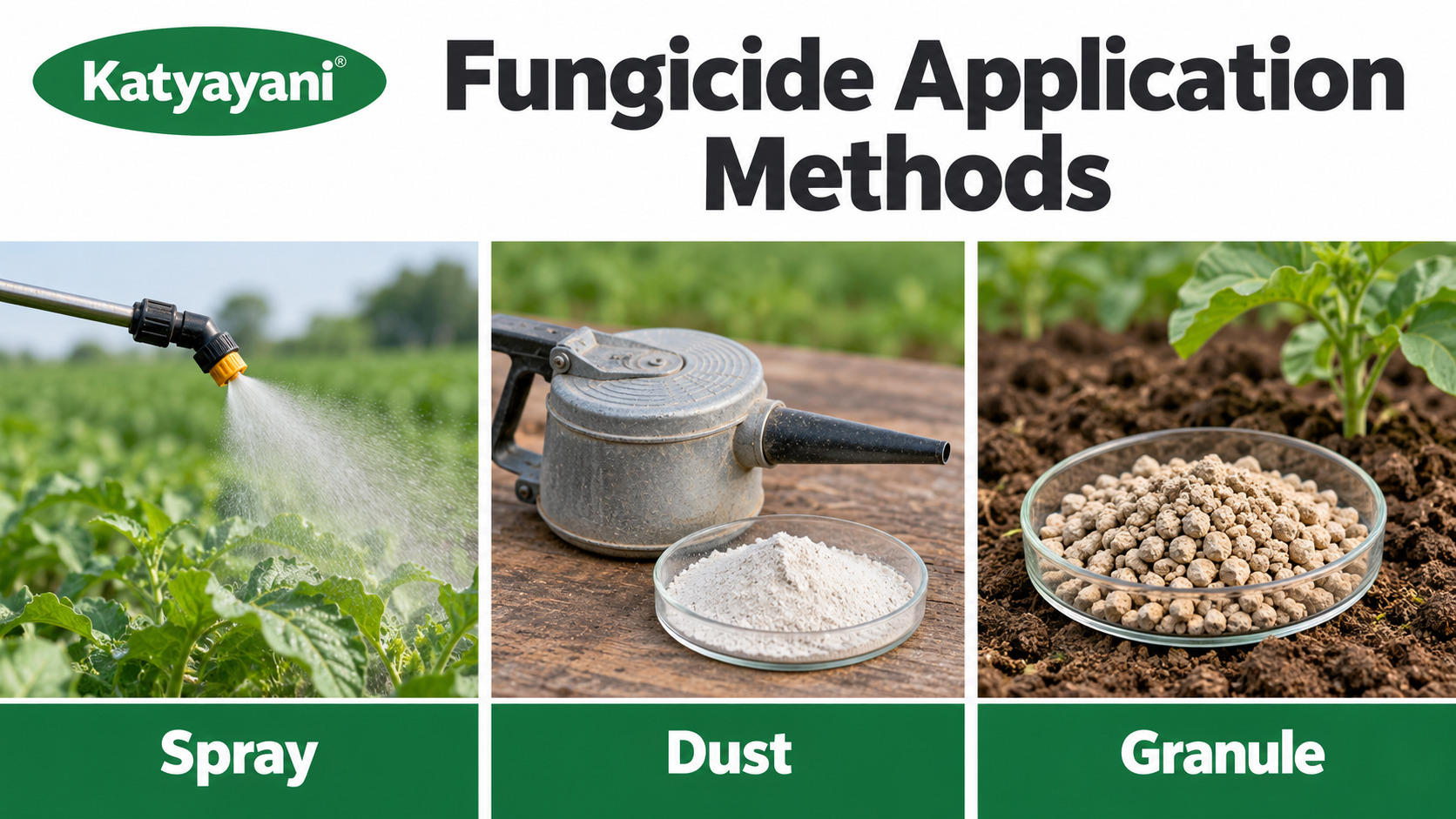
Fungicide Application Methods: Spray, Dust, Granule
Match the method to where the disease lives. Use foliar spray for leaf diseases, seed treatment and soil drench for root and seed-borne diseases, and granules in the furrow at planting.
 6 min
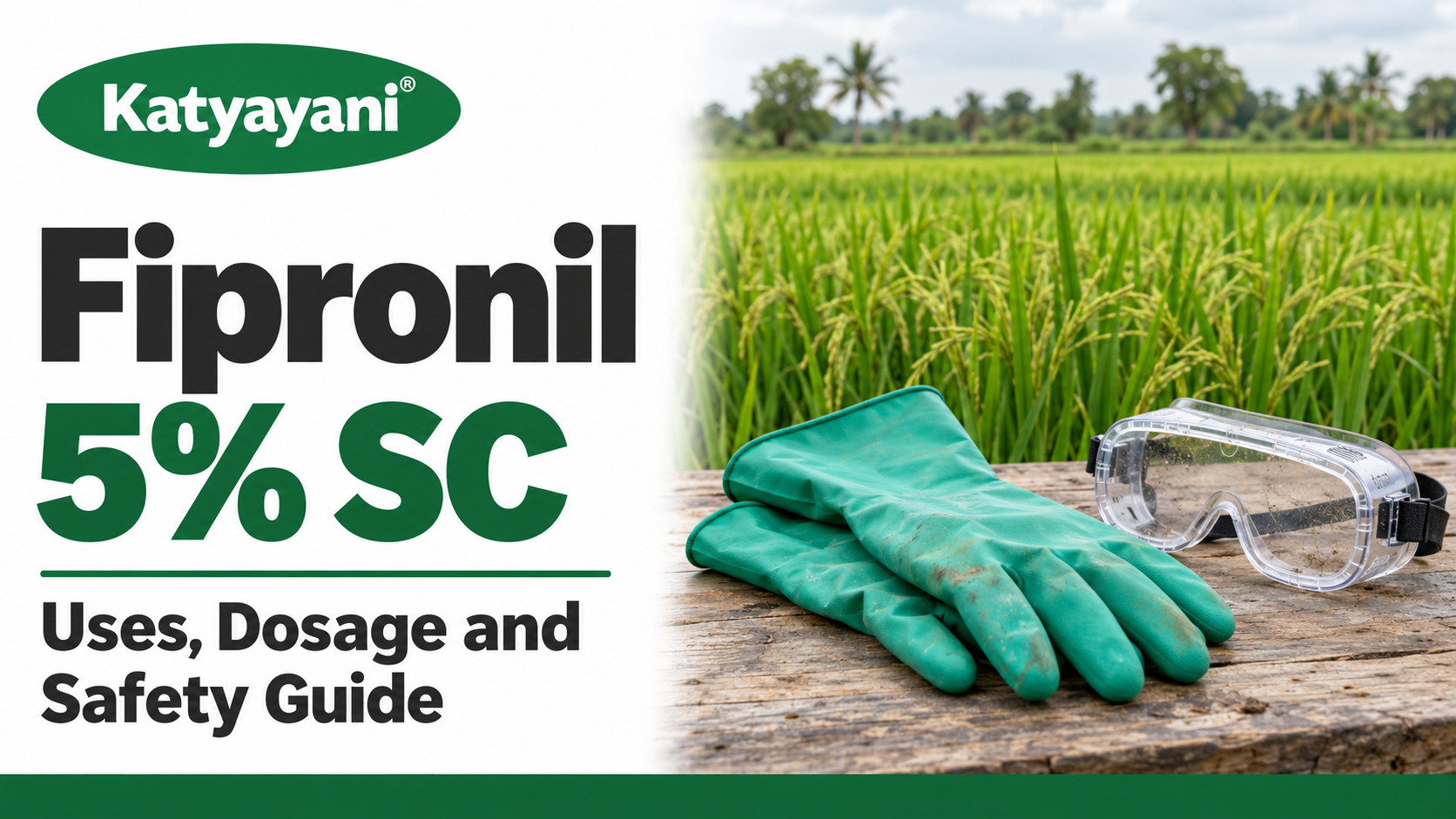
Fipronil 5% SC: Uses, Dosage and Safety Guide
Fipronil 5% SC is a broad-spectrum systemic insecticide for stem borer, hoppers, thrips, aphids and whitefly in paddy, cabbage, chilli, sugarcane and cotton. It is toxic to bees and fish.
 6 min
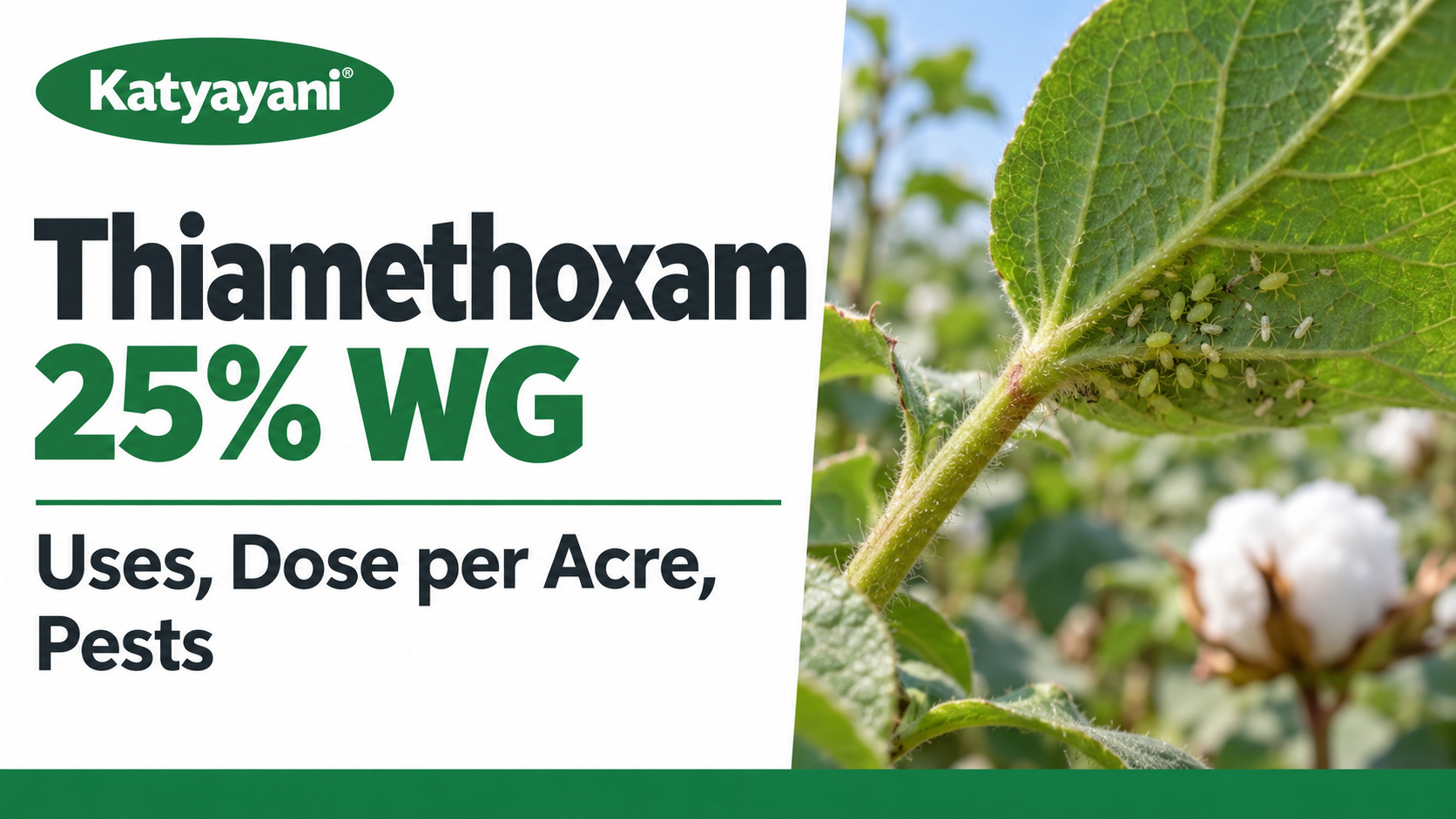
Thiamethoxam 25% WG: Uses, Dose per Acre, Pests
Thiamethoxam 25% WG is a systemic insecticide for sucking pests like aphids, jassids, whitefly, thrips and hoppers. Common foliar dose is 40-80 g per acre in 150-200 litres of water.
 6 min
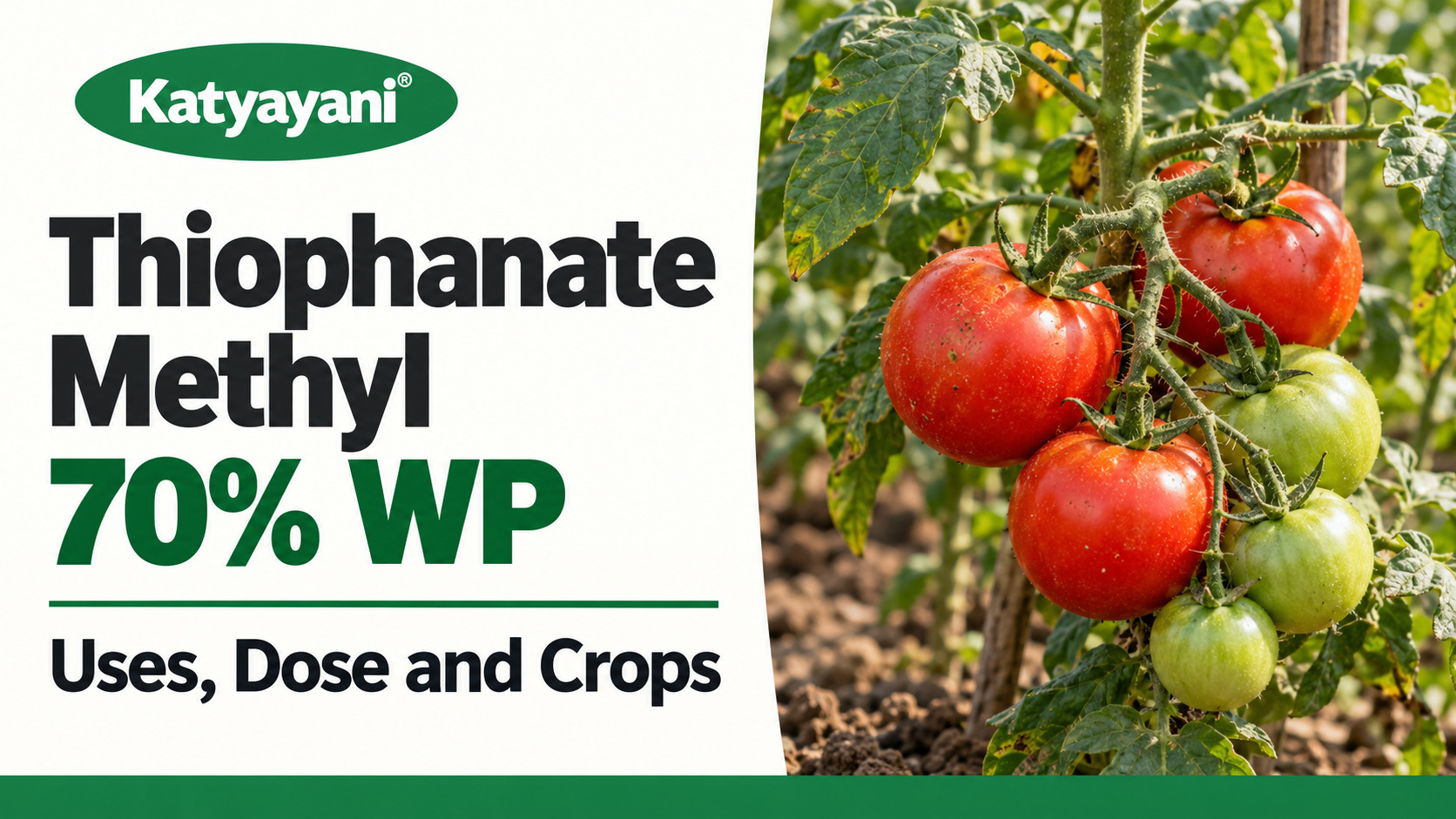
Thiophanate Methyl 70% WP: Uses, Dose and Crops
Thiophanate methyl 70% WP is a systemic fungicide. It controls powdery mildew, scab, rust, anthracnose and wilt. Foliar dose is about 250-600 g per acre. Always follow your product label.